
 Frank Gaimari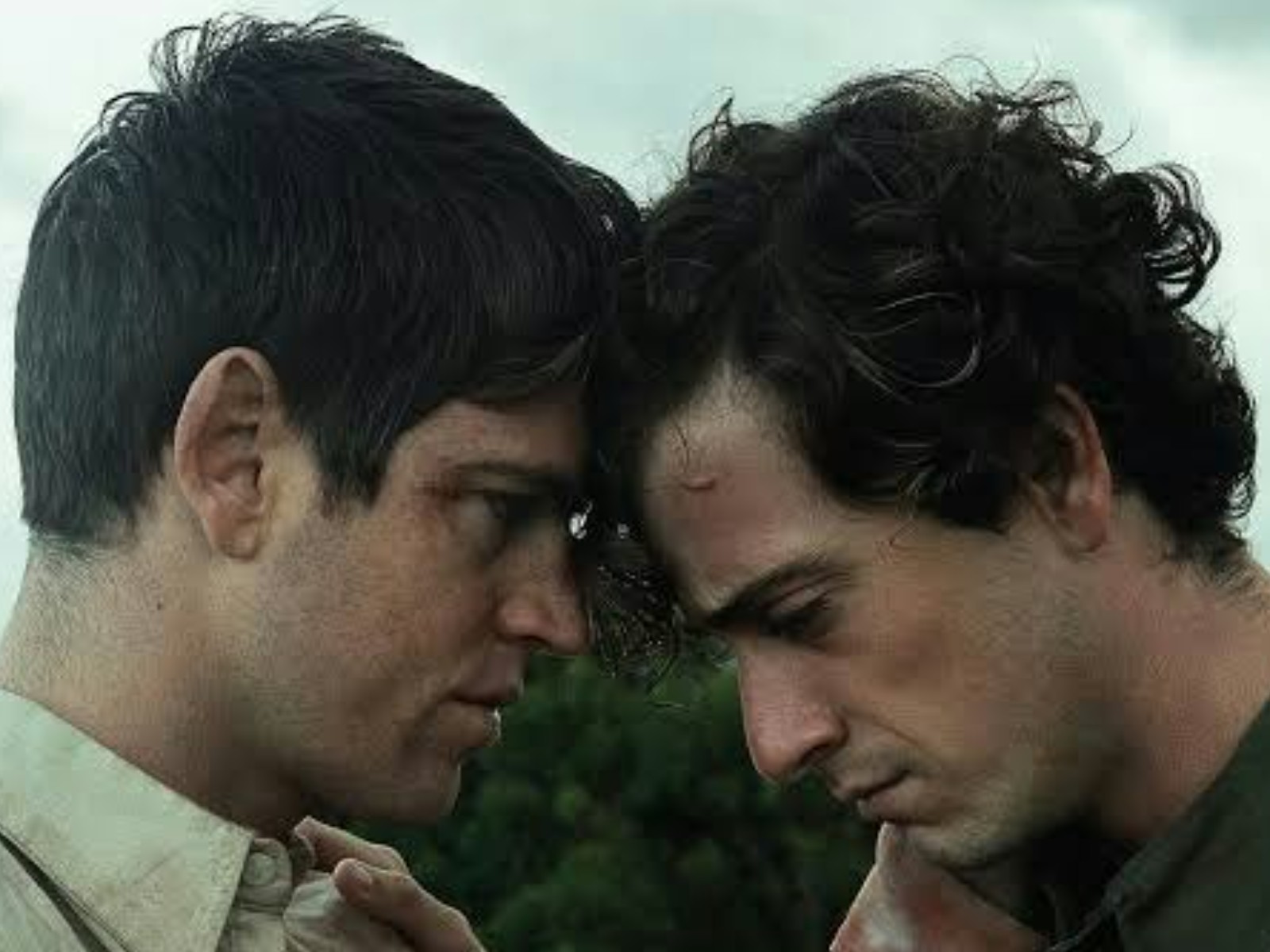
⭐️⭐️⭐️⭐️
160 minutes ‧ R ‧ 2026
Cast: Guitarricadelafuente, Lorenzo Zurzolo, Javier Butler
Director: Javier Ambrossi, Javier Calvo
Genres: Drama, Queer
I caught the opening show of La Bola Negra on October 16 at the Paris Theater, with Glenn Close on hand to introduce it. When it ended, I remained in my seat a little longer than usual, quietly piecing it together.
The film works across three time periods, and yes, it takes a little patience to find your footing. Start with this: the story is rooted in real history, but the filmmakers are not making a documentary. They’re using documented events and real people as a foundation, then dramatizing and exaggerating freely to get at something emotional and true.
In 1932, we follow Carlos (Milo Quifes) — a young man trying to find his place in the world, only to be quietly, brutally shut out. A private club votes to reject him using black balls, a balloting custom that lets members exclude someone without explanation or appeal. Carlos is not a real person. He’s the fictional hero of a play that Federico García Lorca was writing before he was assassinated in 1936 at the outbreak of the Spanish Civil War. Lorca left only a handful of pages. What we see in 1932 is the filmmakers’ imaginative expansion of those pages — part homage, part invention, all of it deliberately theatrical and dreamlike, because we’re inside Lorca’s imagination.

The second thread plunges into the Civil War itself. Here the tone shifts completely. Rafael Rodríguez Rapún (Miguel Bernardeau), Lorca’s real-life partner, is protecting that manuscript while Spain tears itself apart. He eventually passes it to a younger man named Sebastián (Guitarricadelafuente). The third thread, set in 2017, follows Sebastián’s grandson Alberto, who inherits the manuscript and begins to read. As he does, Carlos’s story comes alive on screen. The three timelines collapse into each other in the final act, and Alberto (Carlos González) does something extraordinary: he finishes Lorca’s play. He decides Carlos’s fate. In doing so, he’s also reckoning with his own family’s long silence — the damage that gets handed down alongside the manuscript, generation by generation.
The black balls are the film’s spine. They represent the systemic shame and hostility that queer people in Spain lived under for generations, hardened into law under Franco. Carlos, Sebastián, and Alberto share no bloodline, but they carry the same wound. The film’s quiet argument is that pain and suppression move through time just like manuscripts do — passed from hand to hand, waiting for someone to finally open them.

The acting is superb across all three timelines. The 1932 scenes are stylized and theatrical without going cold. The Civil War section is taut and frightening. The 2017 scenes — particularly the conversations between Alberto and his mother — hit with a naturalistic, almost unbearable intimacy.
La Bola Negra is long and dense, and it asks you to keep up. But every piece earns its place — and the world has noticed. Directors Javier Calvo and Javier Ambrossi took home the Best Director prize at the 2026 Cannes Film Festival, and it’s easy to see why. When the film comes together, it stays with you.
Bring patience. It rewards you fully.
Copyright ©️2026 by Frank Gaimari

YouTube

































































)
)