
 Frank Gaimari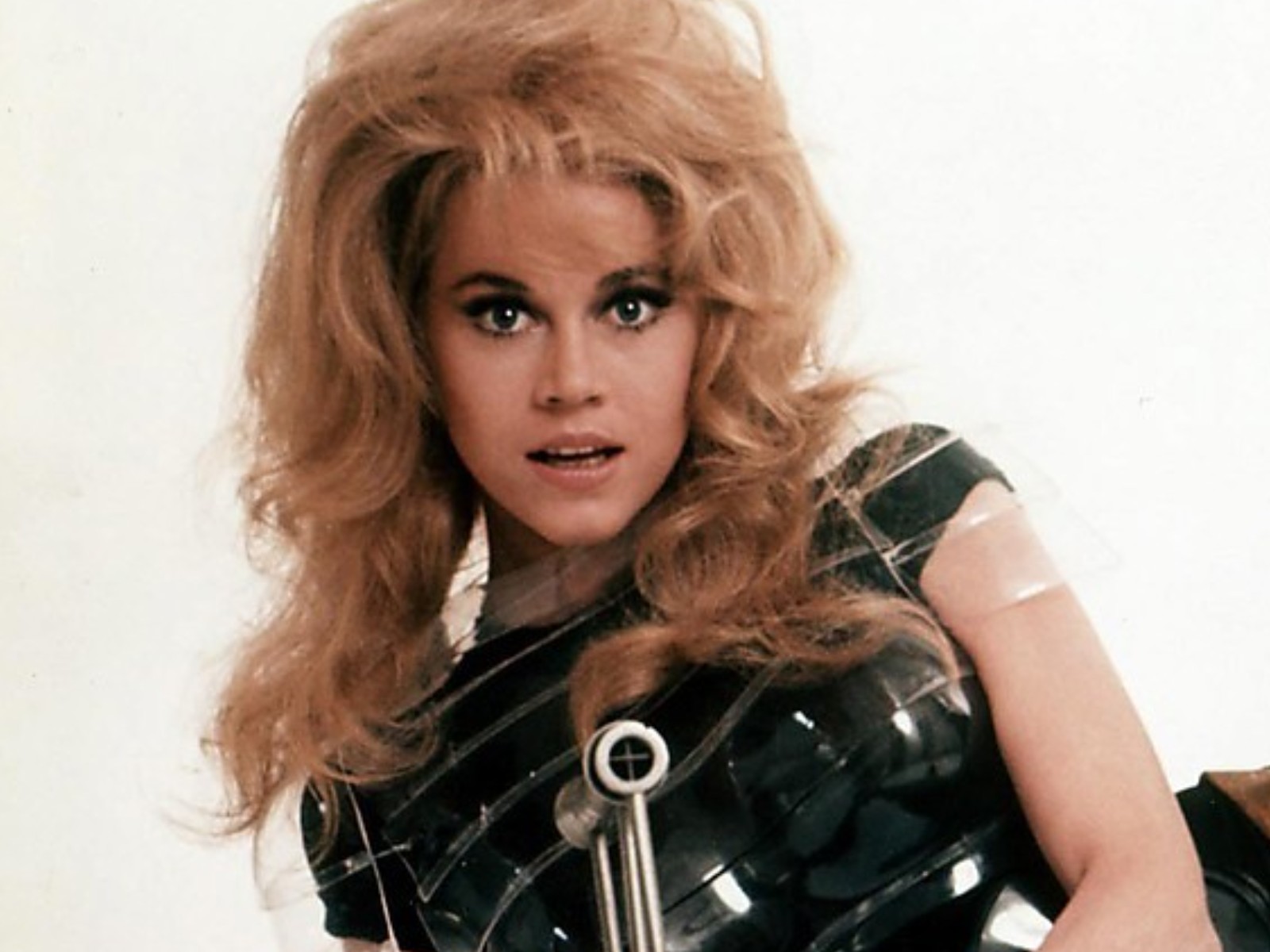
⭐⭐⭐
98 minutes ‧ PG ‧ 1968
Cast: Jane Fonda, John Phillip Law, Anita Pallenberg
Director: Roger Vadim
Genres: Adventure, Sci-Fi
If you found Barbarella confusing, congratulations — you were paying attention. Roger Vadim’s 1968 sci-fi oddity was never meant to make any sense. It plays less like a straightforward space adventure and more like a comic book. Once you stop expecting it to behave like a normal movie, it becomes a lot easier to love.
The setup is simple. Barbarella, a space traveler from Earth, is sent by the President himself to find a missing scientist named Durand Durand, whose invention — the positronic ray — could wipe out humanity. Off she goes to the Tau Ceti system, and the moment she crash-lands, the film abandons logic and starts throwing bizarre encounters at her one after another.


What matters most is who Barbarella is, because she’s no typical hero. She comes from a future Earth where violence has vanished and people don’t even have sex the old-fashioned way — they take a pill and reach a kind of mental rapport instead. It might sound like a throwaway joke, but it’s key to the film. She’s innocent and wide-eyed, so when she lands in a world ruled by cruelty, lust, and spectacle, she meets it with wonder rather than cynicism. That gap between her sweetness and the nastiness around her is where the movie lives.
It’s also where the film’s obsession with her body resides. Barbarella is drenched in nudity, almost all of it Fonda’s — from the famous weightless striptease under the opening credits onward. With her as the central figure, it mostly works — she’s the innocent at the center of every frame — but the imbalance is glaring. The men stay clothed while she’s endlessly undressed, and a film so proud of its own sultriness would have been far bolder if the men had bared as much as she does. As it stands, the eroticism runs in one direction, and the sexual politics feel a little one-sided.
From there, it’s a string of symbolic zones rather than a believable world — ice fields, a rough fur-clad trapper, a labyrinth of exiles, and finally Sogo, a glittering pit of decadence ruled by the Black Queen. The city runs on the Mathmos, a living pool of destructive energy fueled by evil thoughts.


If that sounds hard to follow, it is. Barbarella is episodic, adapted from a French comic, so it feels like flipping through a series of illustrated panels. Vadim and his team of credited writers were clearly more interested in costumes, color, and erotic camp than in narrative coherence. It’s a satire, a fantasy, a sex comedy, and a piece of pop art all at once — refusing to commit to any single genre. If you watch it expecting a straightforward mission movie, you’ll be baffled; but if you see it as a psychedelic tour through power, pleasure, and corruption, it all makes sense.
The cast plays a crucial role in the film’s overall effectiveness despite its imperfections. Fonda stands out, portraying Barbarella with a wide-eyed charm that keeps the film from veering into cheesy camp. (Interestingly, it was directed by Vadim, her then-husband.) Law infuses Pygar with a subtle sadness, Pallenberg delivers an exaggerated performance as the Black Queen, Ugo Tognazzi appears as the alluring fur trapper, and O’Shea presents his villain with a sneaky, theatrical menace. Marcel Marceau, the renowned mime, makes a rare appearance in a speaking role as Professor Ping.
That lasting appeal is the real story behind Barbarella. It’s not because it’s perfect, but because there’s nothing else quite like it. Fonda’s performance gives it a beating heart; the production design and costumes are stunning, and its distinctive mix of kitsch and eroticism proved highly influential.

That’s the whole point of Barbarella. It’s confusing if you treat it like a normal sci-fi adventure, but it truly comes alive when you accept it for what it is: a surreal, satirical comic strip in motion — half space opera, half erotic fever dream — and it’s committed totally to its outrageous style. It doesn’t survive because it makes sense. It survives because nothing else has ever dared to be this weird, this beautiful, and this unapologetically itself.
Copyright ©️2026 by Frank Gaimari




































































)
)