 Frank Gaimari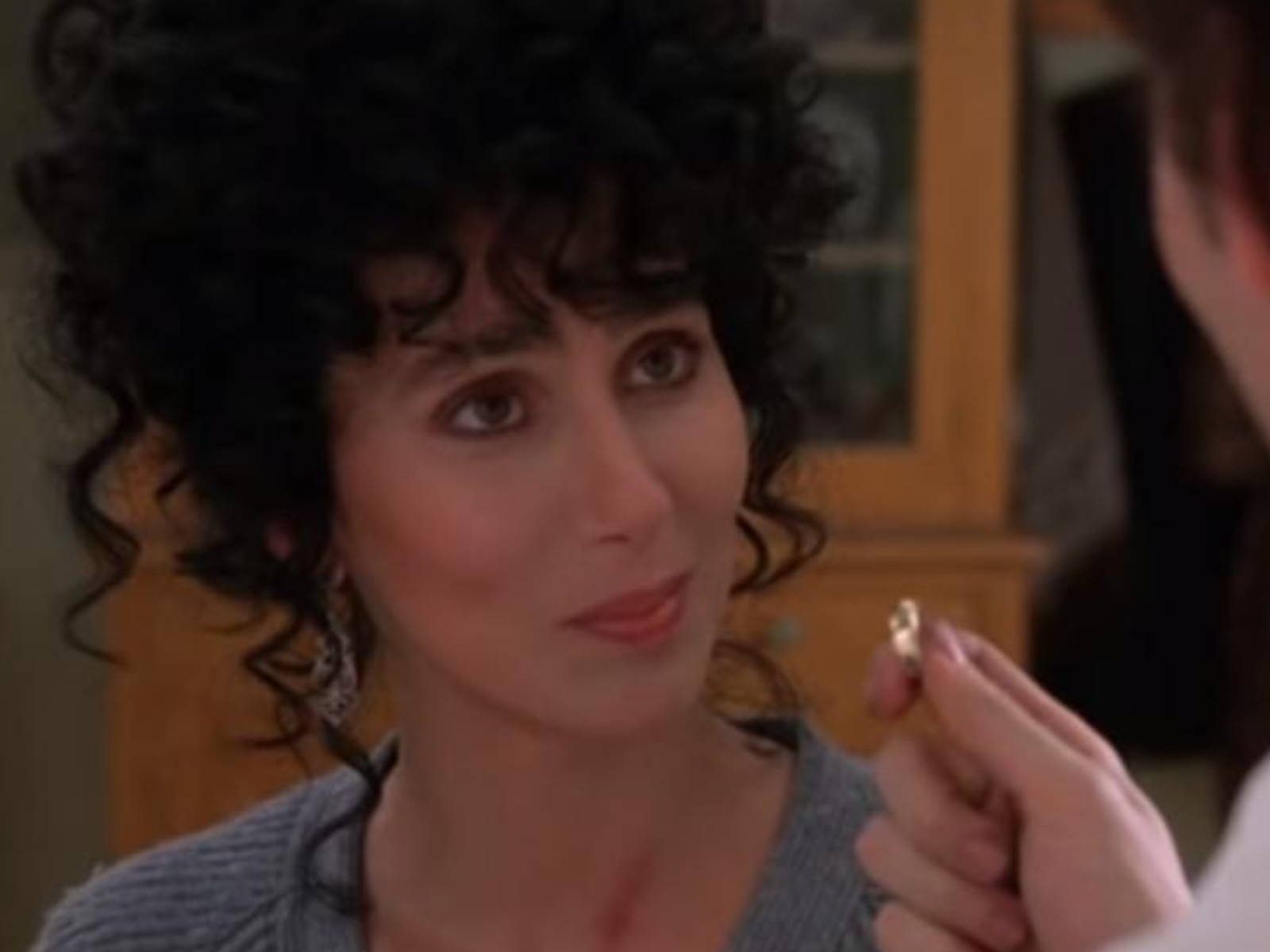
There’s a moment in Moonstruck when Cher hauls back and slaps Nicolas Cage across the face. “Snap out of it!” she barks. It’s four words, but it’s a whole performance, and it tells you everything you need to know about this woman who could have coasted on pop stardom forever but became one of our greatest actresses of all time.
Cher first stepped onto film alongside then-husband Sonny Bono in Good Times (1967), a goofy musical lark that nobody mistakes for great cinema. Two years later came Chastity (1969), a low-budget drama written by Sonny with Cher carrying the title role. Neither film set the world alight, but something was simmering. You could already see the camera liked her face — that strong, unusual, unforgettable face that refused to look like anyone else’s. And then she did something brave — she walked onto a Broadway stage.
In 1982, Cher made her Broadway debut in Robert Altman’s production of Come Back to the Five and Dime, Jimmy Dean, Jimmy Dean. Critics expected a pop star playing dress-up. What they got was a real actress. Even the famously tough Frank Rich called her “ingratiating.” When Altman brought the play to film that same year, Cher came with it and earned a Golden Globe nomination. The message was clear — she wasn’t a curiosity. She was the real thing.
Mike Nichols cast her next in Silkwood (1983), opposite Meryl Streep and Kurt Russell. Cher played Dolly Pelliker, a lesbian factory worker at a nuclear plant, with a quiet, lived-in honesty that stopped people cold. The performance earned her an Academy Award nomination for Best Supporting Actress and a Golden Globe win.
Two years later came Mask (1985), directed by Peter Bogdanovich. As Rusty Dennis, the fiercely loving mother of a boy with a rare disfiguring condition, Cher delivered raw, ferocious tenderness. The role won her the Best Actress prize at the Cannes Film Festival. A pop singer from El Centro, California, standing on the French Riviera with the highest honor an actress can claim there. Take that in. Then 1987 arrived, and Cher simply took over the movies.
In a single year, she starred in three films. In The Witches of Eastwick, she traded barbs and broomsticks with Jack Nicholson, Susan Sarandon, and Michelle Pfeiffer. In the legal thriller Suspect, she carried the lead as a public defender opposite Dennis Quaid and a young Liam Neeson, earning warm reviews even from critics who poked holes in the plot. And then there was Moonstruck.

If you have never seen Moonstruck, stop reading and go fix that. If you have, you already know. Director Norman Jewison’s 1987 romantic comedy is one of those rare films where everything clicks — the writing, the cast, the light, the love. And at its glowing center is Cher as Loretta Castorini.
Loretta is a widowed Brooklyn bookkeeper, practical to the bone, engaged to a dull but safe man. She believes her first marriage ended badly because of bad luck, so this time she’s playing it safe. No passion. No risk. Just a tidy plan. Cher plays her with her hair pulled back and her shoulders squared, a woman who has decided romance is a young person’s foolishness.
Then she meets Ronny, her fiancé’s estranged brother, played by Nicolas Cage in one of the wildest, most operatic performances of his career. Ronny is all fire and grief and one wooden hand, raging in a bakery basement.
The film blooms under moonlight. There’s a fat, romantic moon hanging over Brooklyn, stirring up old people and young people alike, melting everyone’s good sense. Olympia Dukakis, as Loretta’s wise mother Rose, anchors the whole thing with dry, aching humor — her quiet line, “I just want you to know no matter what you do, you’re gonna die, just like everybody else,” lands like a gut punch wrapped in a shrug. Dukakis won her own Oscar for it, and deservedly so.
The essence of the film is Loretta’s transformation. Cher moves from a reserved, dull appearance to a lively woman who styles her hair, wears a red dress, and walks into the opera with Ronny, full of energy. The change is subtle, reflected in her eyes, posture, and her emerging desire for something more. The pivotal moment is that slap — when Ronny admits his love and Loretta hits him twice, shouting, “Snap out of it!” — marking a major turning point. It’s a mix of humor, intensity, and tenderness — a woman confronting her own feelings and losing in a way that feels empowering. Cher’s outstanding performance in this role earned her the Academy Award for Best Actress and the Golden Globe.
Riding high, Cher chose her roles carefully and turned down piles of them. In Mermaids (1990), she played Rachel Flax, a restless single mother dragging her daughters — Winona Ryder and a tiny Christina Ricci — from town to town. It’s a charming, bittersweet film, and Cher gives Rachel both glamour and real maternal worry.

She stepped back from leading roles for a stretch, popping up in Robert Altman’s The Player and Prêt-à-Porter as herself. Then, in 1999, she joined a powerhouse ensemble — Judi Dench, Maggie Smith, Joan Plowright, Lily Tomlin — in Franco Zeffirelli’s Tea with Mussolini, playing the brash American art lover Elsa. Surrounded by British acting royalty, she more than kept up.
In 2010, she returned to the big screen with a bang in Burlesque, playing nightclub owner Tess opposite Christina Aguilera. It let her sing and act in the same frame, a reminder of everything she does at once. And in 2018, she lit up Mamma Mia! Here We Go Again, as Ruby Sheridan, arriving late to belt “Fernando” and steal the whole show.
So let’s tally it up — one Academy Award for Best Actress (Moonstruck), plus an earlier nomination for Silkwood. A Best Actress prize at the Cannes Film Festival for Mask. Three Golden Globe wins across her television and film work. Not bad for someone who once shrugged, “I act really great, but I don’t think of myself as an actress.”
Copyright ©️2026 by Frank Gaimari