
 Frank Gaimari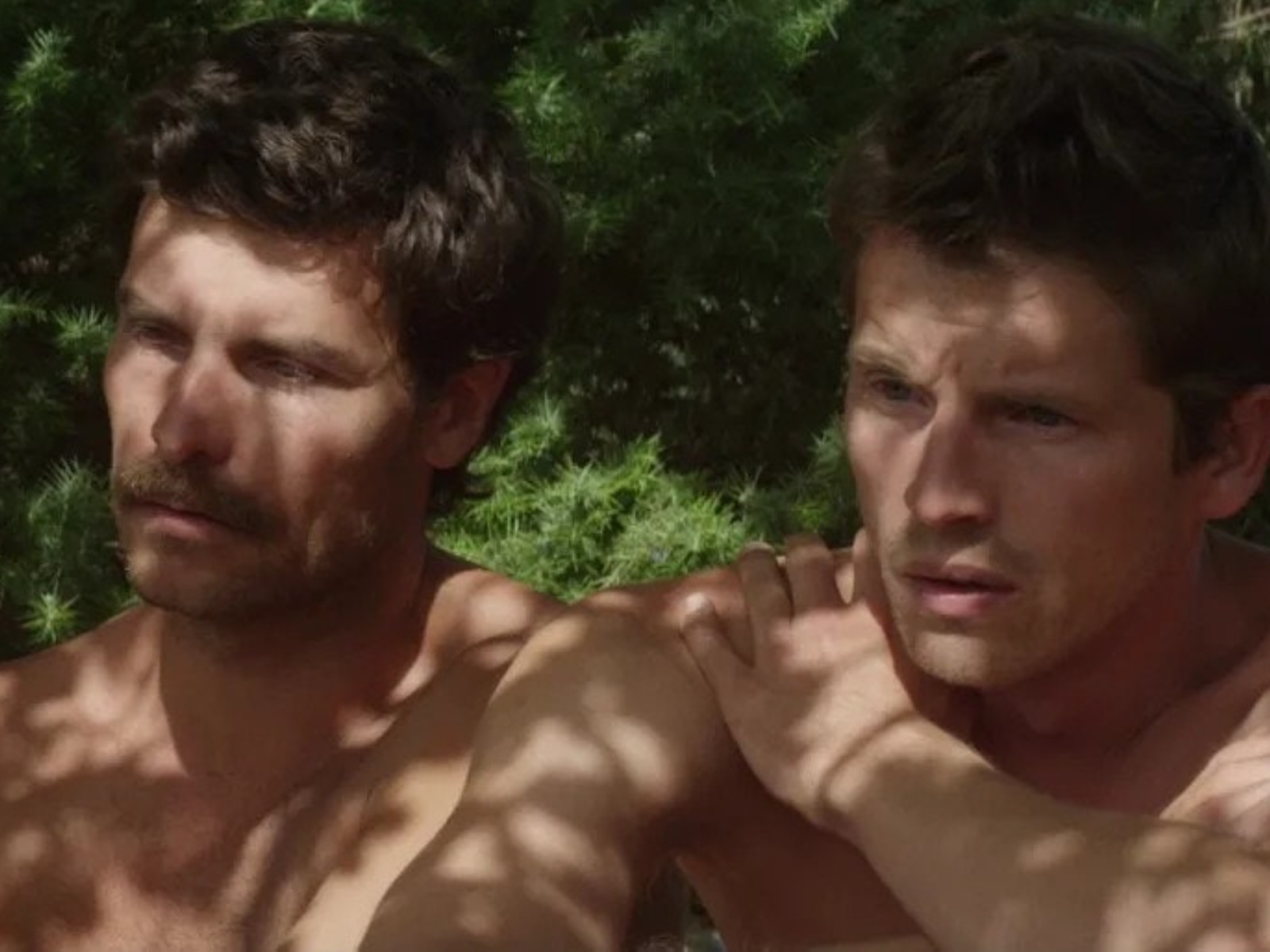
⭐⭐⭐⭐
100 minutes ‧ Unrated ‧ 2013
Cast: Pierre Deladonchamps, Christophe Paou, Patrick d’Assumçao
Director: Alain Guiraudie
Genres: Drama, Queer
There’s something genuinely unsettling about Stranger by the Lake, and for me, it isn’t the murder itself — it’s how loneliness can so completely twist someone’s judgment. The most disturbing thing is watching someone, desperate for affection and connection, witness a murder and then choose to befriend the murderer just to avoid being alone.
Alain Guiraudie, the director, sets his entire 2013 French film at a single lakeside spot that’s used for cruising by gay men. At first glance, the setting is idyllic — sparkling water, warm sun, and a sense of hidden freedom. But as the days blur together, the film’s world grows claustrophobic. Everything important happens by the water’s edge, watched by strangers and friends who share only fleeting moments.
The plot revolves around Franck, a man whose longing is almost visible on his face. He splits his time between a gentle, lonely friendship with Henri — someone who sits quietly apart from the action — and a consuming obsession with Michel, a seductive and apparently dangerous man. When Franck sees Michel drown another man, he doesn’t run or warn anyone. Instead, he’s drawn in even further, swept up in a romance that’s equal parts lust, denial, and danger. There’s something deeply raw about how Franck ignores every warning sign, maybe because — to him — being desired is worth any risk.
I have to mention how the film treats nudity and sex. There’s no shyness here — what you see feels real, unfiltered, and sometimes uncomfortable. This isn’t about eroticism so much as it is about vulnerability. Nobody is hiding anything by the lake, and that honesty works both for and against the characters. The sex scenes are explicit, but I never got the sense that they were meant to provoke or titillate, more that they laid bare just how exposed everyone is — not just physically, but emotionally and morally.
The suspense in Stranger by the Lake builds in a nearly unbearable way. There’s no dramatic score, just the sounds of water and wind and the occasional snap of a branch. It’s a film that asks you to listen — to other people’s footsteps, to voices at a distance, and to your own sense of right and wrong.
As for the cast, Pierre Deladonchamps brings a quiet complexity to Franck; Christophe Paou as Michel is both alluring and menacing; and Patrick d’Assumçao, as Henri, is quietly heartbreaking. The chemistry isn’t just about sex — there’s a tangle of longing, jealousy, and curiosity between them all. Guiraudie’s direction never lets us forget how isolated each character is, even in a crowd.
The film caught the attention of critics and the festival circuit, winning awards at Cannes and receiving high praise for its boldness. Even with its taboo content, it did surprisingly well at the box office for such an uncompromising and explicit film.
What stays with me is how Stranger by the Lake peels back the layers of loneliness, showing how the need for connection can make us reckless, maybe even blind. If anything, the film’s most lasting impact is the way it forces us to look at our own sense of morality and ask: what would I forgive in the name of love? It’s a film you won’t easily forget — not because of the violence or the nudity, but because it holds up a mirror to the dangers of longing and the price of ignoring the darkest parts of ourselves.
Copyright ©️2026 by Frank Gaimari

















































































)
)