 Frank Gaimari
From the moment I opened Waiting for Something Else, I was hooked. Martin Cloutier’s debut novel is equally hilarious, heartfelt, and thought-provoking. It’s hard to believe this is his first book, as it reads like the work of a seasoned storyteller. The fact that it is already a finalist for the 2026 Lambda Literary Award for Gay Fiction is a testament to Cloutier’s talent and the novel’s excellence.
The story follows James, a self-described bald, bewildered, and Buddhist restaurant manager trying to find his footing in Brooklyn. Nine months into his job at a gourmet restaurant, James is lonely, dateless, and secretly pining for Sherry, a magnetic but self-absorbed Wiccan. But life takes an unexpected turn when James finds himself drawn to Roger, his Gay coworker and a playwright with a knack for crafting sharp, sex-fueled comedies. What begins as a drunken confession of unrequited love spirals into a tangled web of attraction, identity, and self-discovery. Cloutier masterfully navigates these complexities, creating characters who are flawed, funny, and achingly real.
What sets this novel apart is its humor. Cloutier doesn’t just sprinkle in jokes — he builds the entire narrative on a foundation of sharp wit and comedic timing. Yet, beneath the laughs lies a deeply introspective story about the fluidity of desire and the human need for connection. The characters wrestle with their own expectations and limitations, and Cloutier captures these struggles with a blend of empathy and brutal honesty. James’s awkward sincerity, Roger’s weary charm, and Sherry’s chaotic energy make for a dynamic trio that keeps the story moving in unexpected directions.
Set against the backdrop of Brooklyn, the novel also explores themes of transformation — both personal and societal. The city’s gentrification mirrors the characters’ journeys as they grapple with shifting identities and desires. Cloutier’s prose is sharp and evocative, painting a vivid picture of a world in flux while keeping the focus squarely on the messy, beautiful humanity of his characters.
This is a novel that doesn’t shy away from the uncomfortable. Cloutier dives headfirst into the awkwardness of relationships, the contradictions of attraction, and the ways we sabotage ourselves in the pursuit of happiness. It’s a story that feels both deeply personal and universally relatable.
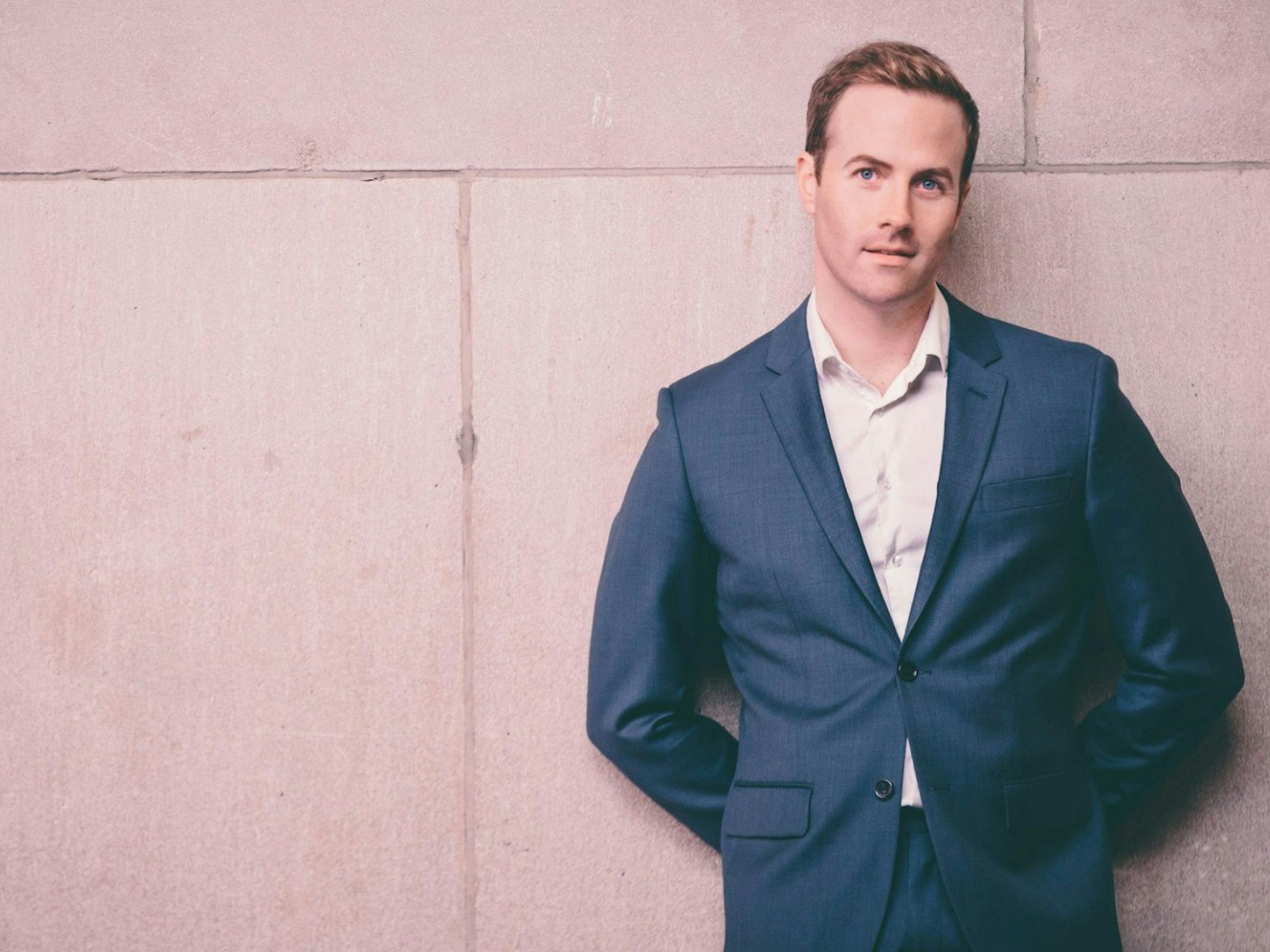
Eager to learn more, I reached out to Cloutier to discuss his inspiration and writing process. He generously agreed to an interview, during which he shared insights into the creation of his book.
Frank Gaimari: Humor plays a central role in your storytelling. How do you balance laugh-out-loud moments with the deeper, more introspective themes of the novel?
Martin Cloutier: Of course, there must be a balance between the two, but one of my central aims was to write a novel that wasn’t just absurd, mildly amusing, or clever in a David Foster Wallace/Thomas Pynchon-esque way but to write with a kind of wit that provokes genuine laughter. Humor wasn’t an afterthought but the engine driving the story.
I try to anchor humor in real emotion. I take a character’s anxiety, anger, or desire and push it until it becomes something exaggerated. For example, Roger spirals after being rejected by James; he goes on an internal rant, musing that the sex was so bad it “should have come with a warning label and protective gloves.” James, thinking lustfully about Sherry, finds his mind returning to the pesky image of Roger’s penis: “He had eaten the forbidden fruit. Drunk the Devil’s nectar. Tasted treif.” That tension, between what characters want to feel and what they actually feel, is where the humor lives and where the introspection sneaks in.
FG: James and Roger’s relationship is complex and unconventional. What do you hope readers take away from their dynamic?
MC: Readers will form their own opinions, but I believe relationships are built over time, not magically discovered like some rare Beanie Baby on eBay. There isn’t one “soulmate” who’s going to fit perfectly into your life. Many people could fit, and whether they do depends on how committed both parties are to working on the relationship.
From my own experience with long-term relationships (eight, five, ten, and currently six years), the focus should be on what you have to give rather than what you expect your partner to give you. If what you have to give — emotionally, psychologically, practically — is not what your partner needs, then there’s no basis to sustain the relationship.
With James and Roger: Roger encourages James’s artistic ambitions, giving him practical advice and confidence in his abilities, and by finding him attractive, he also enhances James’s poor self-image. James gives Roger the stability and devotion he craves while also, by comparison, boosting his creative ego and vanity about his appearance.
FG: You’ve mentioned that your characters are deeply flawed and sometimes unlikable. Why do you think it’s important to portray such raw and honest depictions of humanity?
MC: I find likable characters inherently dishonest. There’s a convention writers use to help readers identify with a protagonist. Most people like to think of themselves as decent, kind, and self-aware. So, a likable protagonist becomes a surreptitious way to flatter the reader: look at this nice character, she’s just like you. It’s a comfort and makes readers feel safe.
But fiction shouldn’t be a mirror that reassures us. It should be a place where we confront what we don’t like in ourselves, where failure, delusion, selfishness, and moral uncertainty can be explored. Some of the greatest literary novels do this using unlikable characters. Wuthering Heights shows how revenge corrodes a life. Madame Bovary exposes the damage of selfishness and delusion. Crime and Punishment dismantles moral certainty. Sabbath’s Theater shows the pitfalls of desire and mortality. These books, and many others, don’t require their protagonists to be likable or even moral to be readable.
Currently, there’s a demand that protagonists be upstanding citizens, or at least be legible as “good” people. The result is a sameness of story, depicting characters as underdogs oppressed by external events — death, trauma, addiction, bigotry, illness — rather than agents of their own bad decisions. When fiction narrows in this way, we lose the full spectrum of human behavior, especially the transgressive imagination. For me, the moment when a character stops being good is usually when they start being interesting.
FG: The title, Waiting for Something Else, seems to encapsulate the characters’ struggles with longing and inaction. How did you settle on this title, and what does it mean to you?
MC: The characters are waiters, both professionally and psychologically. Like many of us, they’ve come to New York thinking that, once here, good things will just magically transpire. James moves from Michigan, wanting a girlfriend or even a friend who understands his artistic ambitions, but he’s doing nothing to make it happen. Roger, originally from Philadelphia, wants a long-term relationship but continually sleeps with men who seek the opposite. And Sherry comes from Iowa with a half-formed dream of finding a partner and launching a makeup line, but she wastes her energy on narcissists who don’t appreciate her.
I spent fifteen years in restaurants with people like this — I was like this myself — so I know the delusion is real. In New York, you’re always one party, one audition, one meet-cute away from changing your life. And sometimes, that’s just enough to keep you waiting.
FG: The novel delves into the idea of “types” in attraction. Do you believe people can truly break free from their ingrained preferences, as some of your characters attempt to do?
MC: When I started writing the novel, back in the depths of 2006, I believed we all had types that couldn’t be changed. My last two partners were men over 6 feet, 2 inches, and after these giants, I thought I could never be attracted to a guy my height (5 foot, 10 inches) or shorter. I spent my 40s dating in New York, searching for that Holy Grail. But the percentage of tall, Gay men living in my vicinity who were emotionally open, relatively sane, and interested in me was so small that I felt like I was on a quest. Gradually, after years of dating some lofty losers, I found a guy my height who rocked my world. And then I found another … and so on, and so on.
Turns out, types aren’t fixed — they’re habits. And habits can change. Plus, you really do have better sex with shorter guys — there are so many more positions.
FG: What was the most challenging part of writing this novel, and how did you overcome it?
MC: In a word, the most difficult thing was rejection, and I’m not sure I overcame it; I just persevered. I’ve been working on this book for almost 20 years. The first story I ever published was in 2006, and it was about these characters. When I tried to turn it into a novel, I realized I didn’t know how novels worked, so I got an MFA and workshopped it. After graduating, I found an agent who tried her best but couldn’t sell it. In truth, the writing was still unfinished. I put it aside, wrote another novel, and found another agent. She couldn’t sell that novel, and when I gave her Waiting for Something Else, she said, “What’s the point of all the sex?” — a question people still ask to this day.
Years later, a third agent spent nine months revising with me and then insisted I change the title to The Brooklyntagonists or “something with Brooklyn in the title.” When I refused, she dropped me, as though she had a dozen other Brooklyn titles to sell and no time for my nonsense. So, a couple more years elapsed while I finished the 11th draft, and the book finally took its rightful shape. I then queried 335 agents, all of whom passed, and sent it to 20 small presses, who also passed. I finally found Heliotrope Books, which agreed to publish it in 2025.
It was a long journey — first to learn how to structure a novel and then to find a publisher. And really, the only thing that kept me going was that I didn’t have any other forms of validation: no high-paying job, no partner, no family, and approximately 1.5 friends. Writing wasn’t so much a dream as a hostage situation. And I understand why people give it up: there are easier ways to find fulfillment. But I had no other options.
FG: If you could spend a day with one of the characters from the novel, who would it be and what would you want to learn from them?
MC: All my characters are part of me, so technically, I spend every day with them. However, the character I’d most enjoy spending time with is Sherry. I know she’s the potential villain of the story, but that’s more a matter of structure than character. We could talk about how to manipulate men or trash our respective boyfriends. I’m sure we’d have a lot of fun. And I’m sure she’d fall in love with me.
Waiting for Something Else is more than just a debut — it’s a statement. It’s a book that will make you laugh out loud, think deeply, and maybe even see the world a little differently. If this is what Martin Cloutier can do with his first novel, I can’t wait to see what he has in store for us next. Do yourself a favor and pick up this book on Amazon — you’ll be glad you did.
To learn more about the author and his work, visit Martin Cloutier’s official website at https://www.martincloutier.net/.
Copyright ©️2026 by Frank Gaimari