
 Frank Gaimari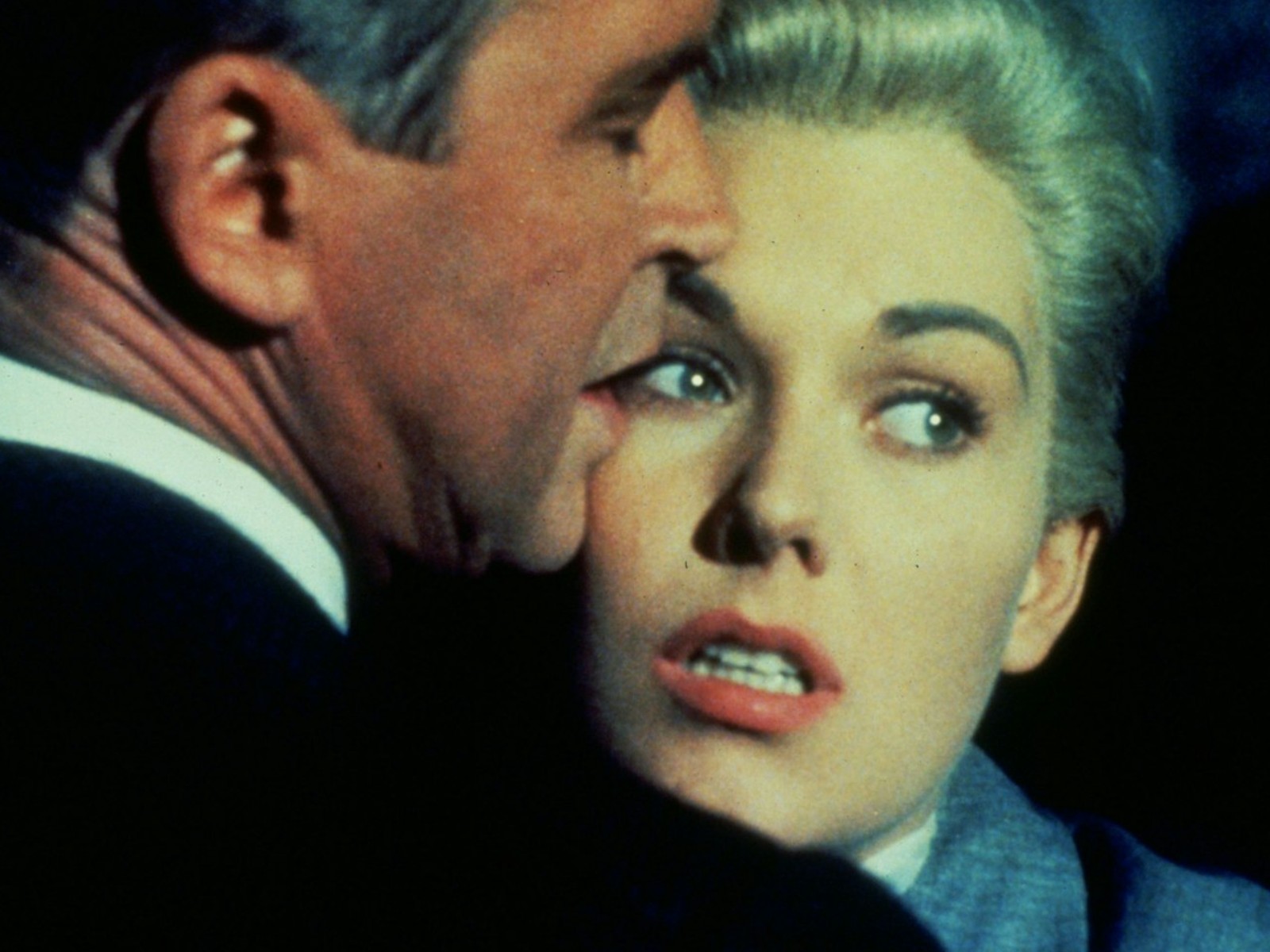
⭐⭐⭐⭐
128 minutes ‧ PG ‧ 1958
Cast: James Stewart, Kim Novak, Barbara Bel Geddes
Director: Alfred Hitchcock
Genres: Drama, Thriller
Alfred Hitchcock’s Vertigo, released in 1958, begins as a classic detective story but quickly transforms into something far deeper and stranger. Hitchcock uses the familiar thriller setup, only to lead viewers into a world of obsession, heartbreak, grief, and the darker corners of the mind.
The story revolves around Scottie (James Stewart), a former San Francisco police detective who develops a severe fear of heights following a traumatic rooftop accident. This incident leaves him emotionally scarred, revealing his vulnerability. When an old friend asks him to monitor his wife, Madeleine (Kim Novak), who is behaving mysteriously, Scottie hesitates but ultimately agrees. He begins to observe Madeleine as she moves through the city — buying flowers, visiting museums, wandering graveyards, and gazing at the ocean. What starts as a straightforward assignment soon becomes an obsession, drawing Scottie deeply into Madeleine’s enigmatic world. After rescuing her from the bay, his interest transforms into an all-consuming fixation.
Without giving too much away, the second half turns everything upside down. Scottie’s obsession intensifies, especially when he meets another woman who closely resembles Madeleine. What follows is uncomfortable and intense, as he tries to mold this new acquaintance into the image of the woman he loved.
James Stewart, typically known for his roles as amiable characters, delivers a performance that is darker and more vulnerable. The audience can feel Scottie’s pain and confusion as he unravels. Kim Novak is equally impressive. As Madeleine, she appears mysterious and almost ethereal. When she portrays Judy, Novak exposes the raw pain of embodying someone else’s dream. The supporting cast, particularly Barbara Bel Geddes as Midge, adds warmth and a sense of reality to the narrative.
The brilliance of this film would not be possible without Hitchcock’s meticulous direction. By the time he made this classic, the director had already established himself with numerous masterpieces, but here he pushed his artistry even further. He devised innovative camera techniques to convey the sensation of dizziness and carefully used color and music to set the mood.
Upon its initial release, Vertigo received a lukewarm response. It made money but did not match the success of Hitchcock’s other works. Critics were divided, and it failed to win major awards. Yet, over time, audiences and critics began to recognize its unique qualities. Today, this psychological thriller often tops lists of the greatest films ever made.
Copyright ©️2026 by Frank Gaimari

















































)
)