
by Frank Gaimari
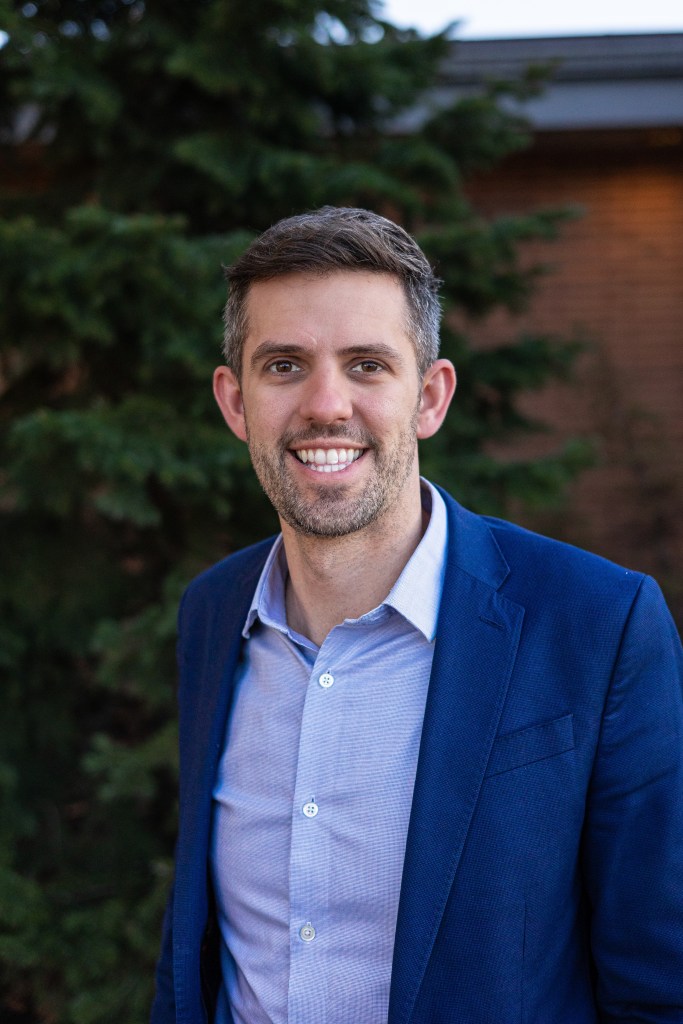
Zack Zappone, a proud Spokane native and current District 3 representative on the Spokane City Council, is seeking re-election to further his efforts in shaping the city’s future. Born into a working-class, union family, Zappone’s upbringing instilled in him the values of perseverance, fairness, and a deep connection to his hometown. Today, he draws upon those principles to guide his work as a public servant, fighting for the needs of Spokane’s families.
Zappone’s story begins in Spokane, where he graduated from North Central High School. Raised in a family with a legacy of hard work, he developed a profound appreciation for Spokane’s character and its people. His early experiences working at McDonald’s helped fund his dreams, and securing a full-ride scholarship paired with his academic achievements propelled him to Princeton University, where he earned a master’s degree in public policy and urban planning.
Rather than pursuing a conventional post-Ivy League route, Zappone chose to return home to Eastern Washington. He began a teaching career in Kennewick Public Schools, sharing his passion for education as an English and history teacher. He later became a Fulbright Scholar, expanding his horizons internationally in Colombia before returning to Spokane to serve as both an advocate and an educator.
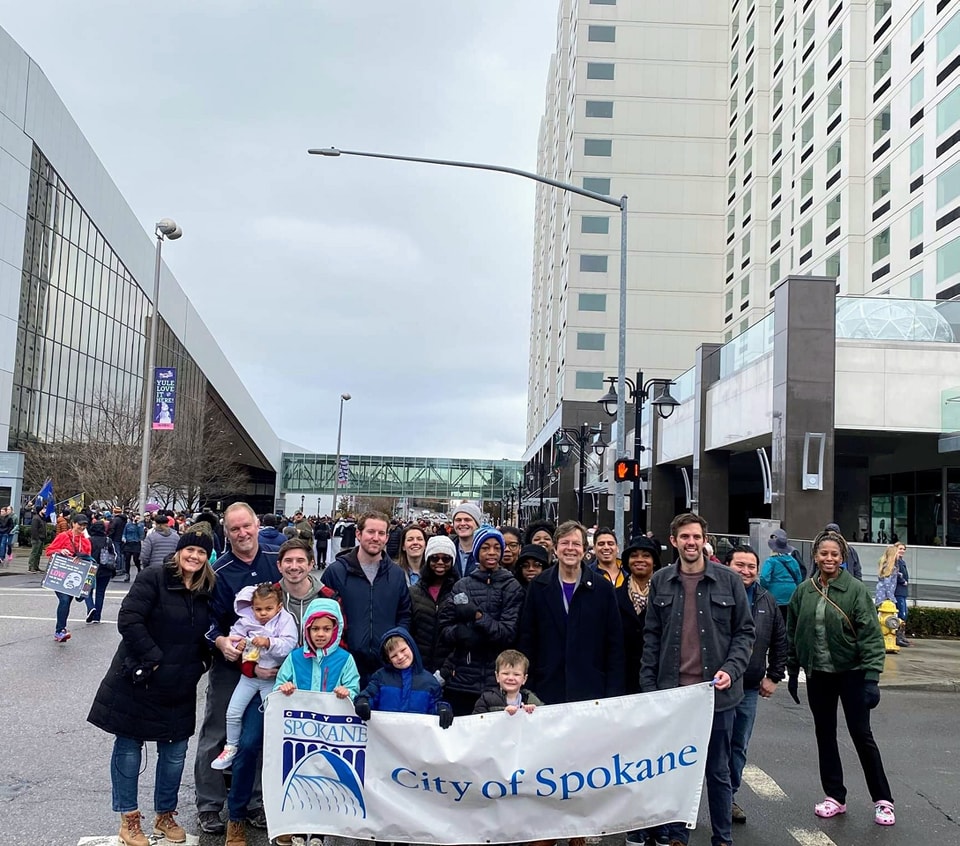
Now, while balancing the responsibilities of the City Council, Zappone continues to teach social studies part-time at his alma mater, North Central High School, serving as a mentor and role model to the next generation of Spokane leaders.
Zappone made history in 2021 as Spokane’s first openly queer person elected to city council.* This achievement symbolized a broader shift toward diversity and inclusivity in Spokane’s government. Representing District 3, which spans northwest Spokane and includes Browne’s Addition, Zappone focuses on policies that amplify the voices of working- and middle-class communities.
His legislative priorities focus on key issues, including housing affordability, public safety, and infrastructure improvements. Zappone has been instrumental in advocating for housing density reforms to tackle Spokane’s housing shortage, including expanding options for “missing middle” housing throughout the city. He has also supported initiatives for fare-free public transit, emphasizing accessibility and economic mobility for residents. Additionally, he has championed Safe Street initiatives that enhance safety for all road users, including cyclists, pedestrians, and drivers.
A defining characteristic of Zappone’s leadership is his ability to build bridges and find common ground. He frequently works across political divisions, championing practical solutions to complex issues. For example, Zappone collaborated with conservative colleagues to reduce parking requirements along transit routes and to eliminate all parking minimum mandates citywide.
Zappone advocates public safety through a balanced approach. He supports citywide bans on encampments while also working to expand access to essential services, such as behavioral healthcare and affordable housing. This dual focus aims to address the root causes of these challenges. His pragmatic style ensures that Spokane’s policies are both compassionate and effective.
Over his first term, Zappone has secured funding for community health clinics within low-income schools, fostered investments in local business districts, and helped streamline processes to reduce blighted properties while encouraging development. His efforts reflect a focus on making Spokane a place where all residents can thrive.
As part of this article, I had the opportunity to talk with Zack Zappone to discuss his re-election campaign and vision for Spokane. Here are the questions I posed to Zappone, along with his responses.
Frank Gaimari: What inspired you to pursue a career in public service and run for Spokane City Council?
Zack Zappone: Growing up in Spokane, I witnessed inequalities in our community, which became more apparent when I attended college on the East Coast. Many of my friends back home didn’t have the same opportunities as some of my peers in college. This realization motivated me to become a teacher and relocate to the Tri-Cities, where I could work with low-income students and provide them with opportunities to succeed. Despite their hard work, these students faced significant barriers, such as a lack of access to healthcare, unsafe neighborhoods, and a shortage of living-wage jobs.
I went on to graduate school for public policy and returned to Spokane right before the pandemic. During the pandemic, I stepped up to serve my community by volunteering with my dad to deliver over 100,000 meals with Spokane Food Fighters. I ultimately decided to run for Spokane City Council to continue advocating for working and middle-class families, ensuring they have a fair shot at success.
FG: How has your background as a teacher influenced your approach to policymaking?
ZZ: As a teacher, I witness the everyday impacts that policy decisions have on my students. For instance, during a council meeting where we will be discussing fluoride, a student might tell me they need to miss school the next day for a dental filling. Policymakers often become disconnected from the real-life effects their decisions have on people. In my classroom, I see those impacts firsthand every day.
I also facilitate many discussions and guide my students toward achieving communal goals. Similarly, as a policymaker, I strive to engage with stakeholders, have honest conversations, and work collaboratively to improve our policies for the benefit of everyone.
FG: What challenges did you face as the first openly queer candidate elected to Spokane’s city government, and how did you overcome them?
ZZ: My biggest challenge was personal. I came out as queer just a year and a half before running for office, and I was still navigating my identity during my campaign. I had a conversation with my parents to let them know I’m queer in case it came up during the election. At that time, I didn’t feel completely confident in my queerness, and I hadn’t established strong connections with queer organizations and leaders in Spokane. I had moved back home right before the COVID-19 pandemic, which made me feel like I was going back into the closet.
Fortunately, Spokane has a strong and supportive queer community. I reached out to Dean Lynch, a former queer council member, as well as other community leaders for guidance. Since being elected, those relationships have only deepened. I meet regularly with our queer leaders, and we have collaborated on policies and city priorities to ensure that Spokane is a place where everyone belongs.
FG: How do you plan to balance the needs of working-class families with the city’s economic growth initiatives?
ZZ: We need to grow alongside our community members, not in isolation from them. Affordability is a challenge that affects everyone in our community, from working and middle-class families to small business owners and employees of large corporations. I have advocated for a tax code that requires the wealthy to pay their fair share. Although addressing an unfair federal and state tax code is challenging at the local level, I have championed a range of initiatives to foster growth and support working families. These efforts include targeted investments and the removal of unnecessary regulations, all aimed at creating a more equitable and prosperous community.
I have led efforts to reform housing and parking regulations, allowing for the construction of various types of housing throughout the city and reducing costly parking mandates that can increase construction costs by $20,000 to $30,000 per unit. I have also invested in school-based healthcare centers to ensure that children have access to healthcare and can quickly return to class. Furthermore, I have allocated millions towards affordable housing projects and supported incentive programs to encourage the development of more housing. Additionally, I have advocated reduced-fare bus passes, enabling families to retain a greater portion of their earnings from each paycheck.
FG: Can you share your vision for improving public safety in Spokane while fostering community trust?
ZZ: Training and transparency are essential for building community trust in public safety. I successfully secured $1.4 million from the state to expand Spokane’s Law Enforcement Training Center, ensuring that every officer receives modern training in de-escalation and crisis response. We are also expanding the co-responder model, which teams behavioral health professionals with officers, and increasing foot and bike patrols so residents can become familiar with the people who protect them.
Additionally, I have supported the authority and independence of the Office of the Ombuds. Recently, an incident occurred involving the public and law enforcement at an ICE protest. I fully support an independent investigation to understand what happened, followed by discussions with organizers and law enforcement to learn from the experience and improve future demonstrations. This focus on training and transparency is vital for fostering community trust.
FG: How do you approach collaboration with colleagues who may have differing political views?
As a teacher, I work with individuals from diverse backgrounds and beliefs, and the same approach applies to my role as a council member. I start by building personal relationships to foster understanding between us as individuals. I firmly believe that much of the conflict arises from a lack of communication and familiarity with one another, which can lead to othering, prejudice, and negative assumptions.
While we may not always agree with those who have different perspectives, engaging in difficult conversations and actively listening to one another allows us to understand each other better and address the issues that create conflict.
I then focus on finding common ground and shared goals so that we can collaborate effectively. For instance, I worked on parking reform with a council member and stakeholders with whom I have significant differences. However, because we all shared the common goal of increasing affordable housing, we were able to come together and make improvements in our community.
FG: What accomplishments during your time on the City Council are you most proud of?
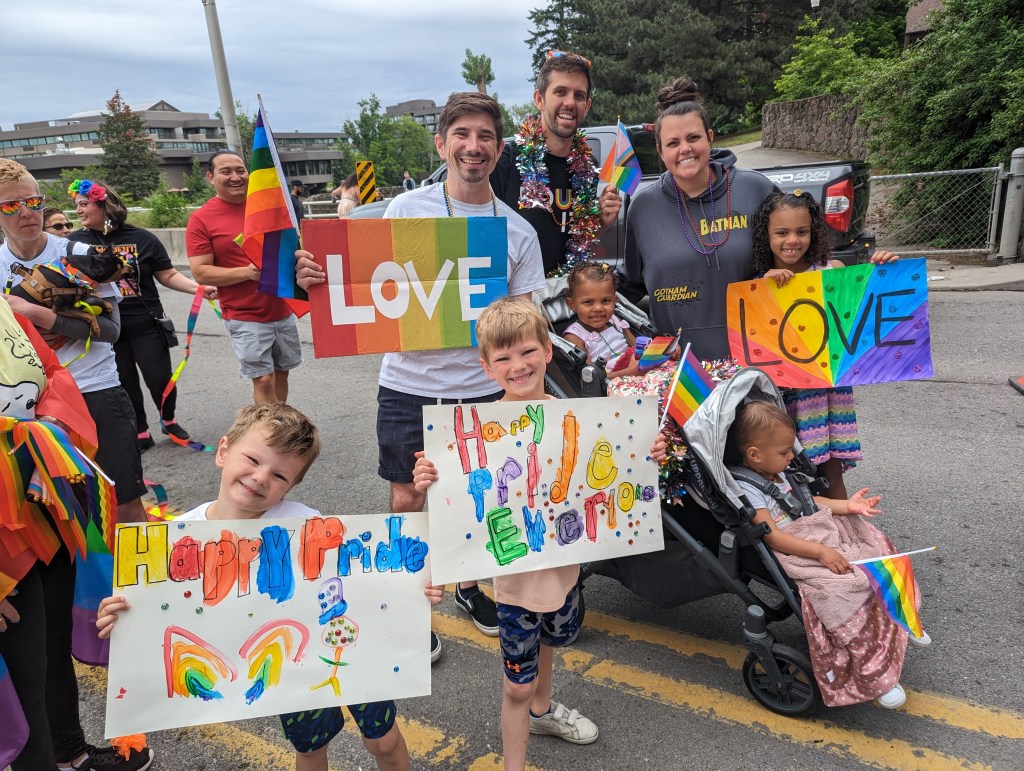
I’m proud of the efforts I’ve led to help us embody our new city motto: “In Spokane, We All Belong.” We not only painted our first Pride crosswalk, but we also transformed an entire intersection into a Pride flag. Unfortunately, an instance of vandalism highlighted a loophole in state law, which states that vandalism on public property is not considered a hate crime, but only on private property. I worked with state lawmakers to close this loophole, ensuring that they classify vandalism targeting LGBTQ+ individuals and other marginalized communities on public property as a hate crime.
I’m also proud of our initiatives to remove housing barriers, which have made Spokane a national leader in housing reform and helped stabilize our housing market.
Finally, I take pride in the improvements I’ve championed for Safe Streets and access to public transit. The city has begun piloting enhanced bike lanes and pedestrian improvements, while Spokane Transit is implementing a low-income bus fare program. These efforts positively impact the lives of our residents every day.
Zack Zappone’s story is one of resilience, service, and dedication to the Spokane community. His leadership represents a high level of what it means to serve a community, blending bold advocacy with practical solutions to forge a better future. With the upcoming election, Zappone remains committed to ensuring that Spokane grows equitably, offering opportunity and security for all its residents.
For more information, visit: https://zackzappone.com
*Dean Lynch, who was openly queer, was appointed, rather than elected to the city council in 2000, serving for approximately nine months before losing his election. In 2021, Kate Burke publicly came out as queer during the final three months of her term.
Copyright ©️2025 by Frank Gaimari
Frank Gaimari is an author, film reviewer, and actor based in Seattle, Washington. He lives with his husband and their two golden retrievers. Learn more about his work at http://FrankGaimari.com.


Publications

 FRANK'S FILM REVIEW