
By Frank Gaimari

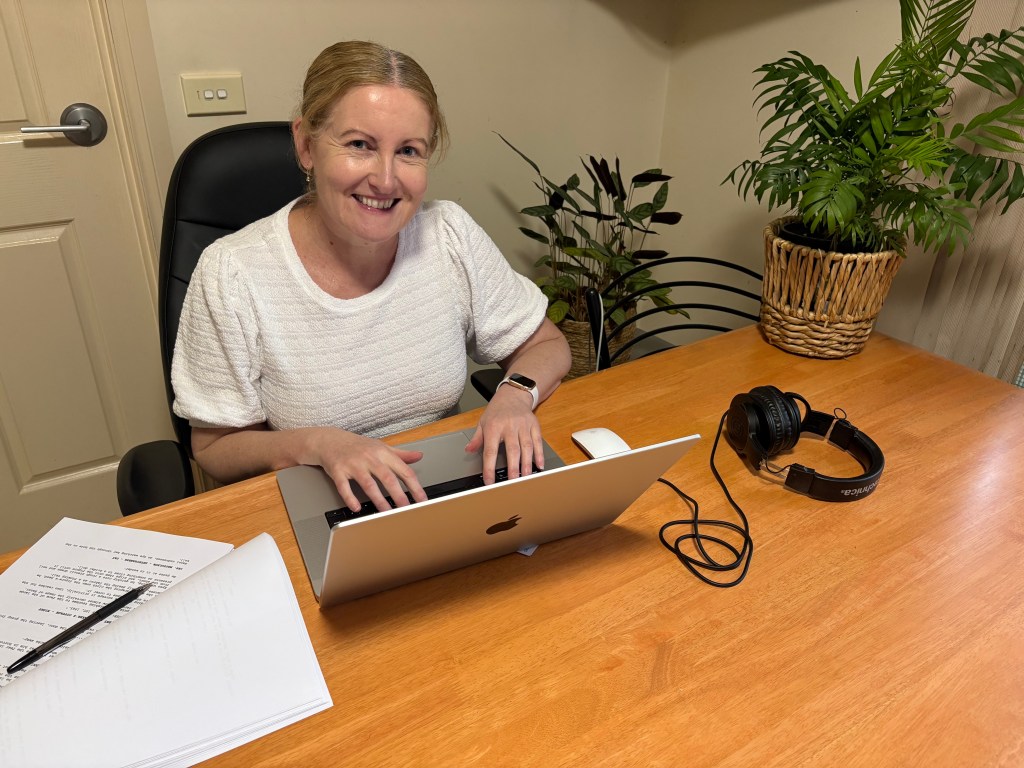
Lyndal Simpson’s journey into the world of screenwriting is a testament to perseverance, passion, and an unyielding commitment to storytelling. Hailing from Melbourne, Australia, Lyndal has carved a niche for herself in the drama, thriller, and horror genres, with her scripts often exploring the lives of outcasts and underdogs. Her work is deeply atmospheric and emotionally resonant, reflecting her unique ability to weave sharp social commentary into compelling narratives.
Her feature screenplay, The Farrell Girl, has garnered significant acclaim, winning awards at the Los Angeles and New York International Screenplay Awards and securing an option deal with an Australian production company. Similarly, her thriller Gravedigger has made waves, earning a spot on Coverfly’s prestigious Red List and catching the attention of industry professionals.
Lyndal’s academic background in History, Politics, and Environmental Science, combined with her life experiences, has shaped her storytelling voice. From her early days writing short scripts to her current success with feature-length projects, Lyndal’s journey is one of resilience and creativity. In this interview, we delve into her inspirations, challenges, and the lessons she has learned as she continues to rise as a formidable voice in the film industry.
Frank Gaimari: What inspired you to pursue a career in screenwriting, and how did you get your start in the industry?
Lyndal Simpson: I’ve loved writing stories since I was a child. While studying for an Arts degree at university, I wrote a 9-page horror script as part of a creative writing unit. Ten years later, when I was a stay-at-home mom with preschool-age children, I wanted to do something for myself and got back into screenwriting. The first screenplay I wrote won the first competition I entered, and a producer soon optioned it. I’ve been hooked ever since!
FG: Can you walk us through your creative process when developing a new screenplay?
LS: It generally starts with a very simple idea. Something that excites me. I then think about it for a while – usually over several weeks or months – and let the story unfold in my mind. Once I have a fairly decent idea of the story, I spill every thought that I have relating to it into a Word document. Sometimes, it’s just the outline of a scene, and other times, it’s very detailed with dialogue. I then use that detailed outline to write my first draft.
FG: How do you approach creating characters that are both compelling and relatable?
LS: Most of my main characters are outcasts or outsiders in some way. This situation creates tension and presents challenges to overcome, making it relatable for the audience since many people have experienced not fitting in or being targeted for their differences. Outsiders are the most interesting, multidimensional characters to me as a writer, and I try to place them in situations that push them to their very limits to see how they’ll react.
FG: What are some of the biggest challenges you’ve faced in your screenwriting career, and how did you overcome them?
LS: Screenwriting is tough. It’s incredibly challenging to break into the industry and get something produced. There’s a lot of work for very little financial reward. So, you need to believe in your projects and yourself as a writer. It’s a test of endurance – writing and rewriting scripts, submitting them to competitions, and querying producers, literary managers, and others. If you’re half-hearted in any way, it’s going to be hard to succeed. I wouldn’t say that I’m mentally tough, but I’m stubborn. I get deflated and sometimes doubt myself when things don’t go my way, but I always seem to bounce back.
FG: What specific genres do you find yourself drawn to?
LS: I’m generally a drama/thriller writer, but I’ve also dabbled in fantasy, sci-fi, and romantic comedy. I believe that all genres fundamentally showcase drama by presenting problems to solve. I also really enjoy writing horror, but with a more spooky, atmospheric vibe rather than outright gore. Most of my writing is character-driven, exploring the human experience.
FG: What advice would you give to aspiring screenwriters trying to break into the industry?
LS: Be prepared for a long, hard slog. The good news is that your writing will improve over time; the bad news is that it’s sometimes not enough. If you’re an introvert, like many writers, you may find that meetings and interviews push you outside your comfort zone. However, don’t give up. As far as the actual writing goes, I firmly believe that you should always write what appeals to you personally and avoid chasing trends.
FG: How do you handle feedback and revisions, especially with directors or producers?
LS: Feedback, in general, can take some getting used to. Many screenwriting competitions offer paid feedback. It can be a bit hit-and-miss, but in general, I’ve found anonymous feedback to be more honest and ultimately helpful than feedback from screenwriting friends. When it comes to notes from producers and directors, I find them a bit overwhelming at first, so I always give myself time to read through the notes and think about them before attempting any rewriting. I then break the rewrite into workable chunks and tackle each issue one at a time. I’ve learned to adapt my stories more flexibly; if I want to get them produced, I need to be ready to make changes.
FG: Can you share a moment or project in your career that you’re particularly proud of?
LS: My first feature screenplay, beating thousands of other entries to win the very first competition that I entered, really gave me a lot of self-belief. It was a defining moment for me when I realized that I was good enough and that I could do this. I’m still very proud of that screenplay – The Farrell Girl – and the emotional impact of the writing.
Lyndal Simpson has established herself as a remarkable storyteller known for weaving deeply emotional and socially conscious narratives. Her acclaimed works, Gravedigger and The Farrell Girl, have solidified her reputation as a compelling voice in the industry. More than just an emerging talent, Lyndal is a visionary poised to captivate audiences and redefine the cinematic landscape.
Frank Gaimari is an author, film reviewer, and actor. He lives in Seattle, Washington, with his husband and two golden retrievers.


 FRANK'S FILM REVIEW