
⭐⭐⭐⭐
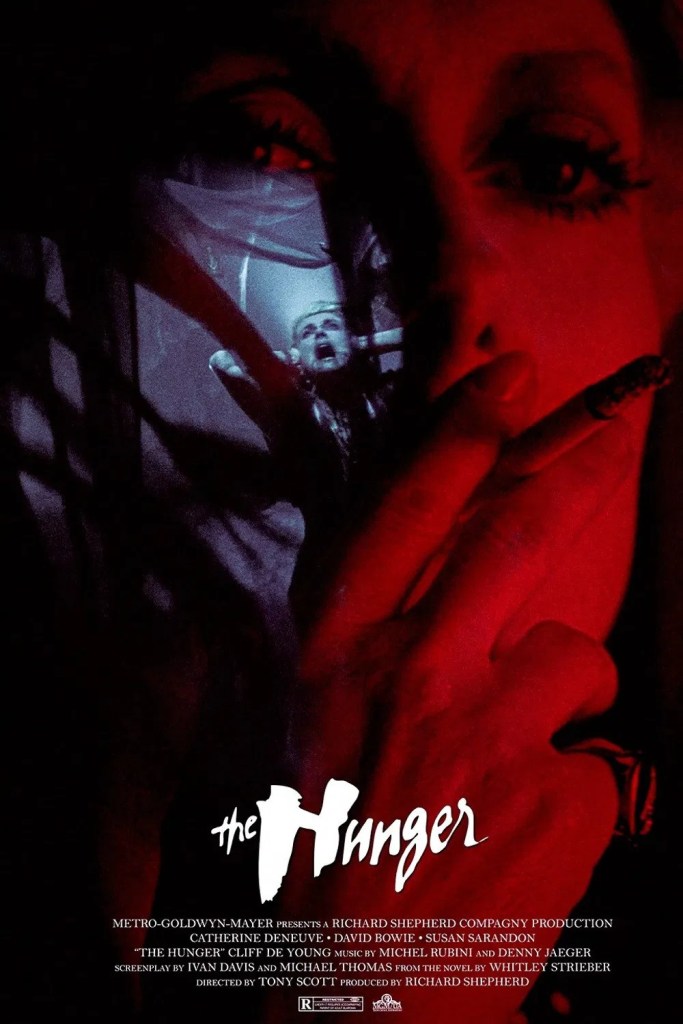
Tony Scott’s 1983 debut, The Hunger, is a visual feast — every shot feels deliberate, every shadow and beam of light perfectly placed. The editing is sharp and hypnotic, pulling you into a world that’s both beautiful and deeply unsettling. It’s the kind of film that stays in your mind long after it’s over.
The story follows Miriam Blaylock (Catherine Deneuve), an ancient vampire who has lived for centuries. She promises her lovers eternal life, and together they hunt and feed, seducing their victims before killing them. Her current partner, John (David Bowie), is a gifted cellist. They live in a New York townhouse, teaching music by day and prowling nightclubs by night. But John’s immortality comes with a devastating twist. After 200 years, his body begins to fail him — he starts aging rapidly. Desperate for answers, he turns to Dr. Sarah Roberts (Susan Sarandon), a scientist studying the effects of rapid aging. At first, Sarah brushes him off as delusional, but when she sees how quickly he’s falling apart, she’s pulled into his world — and into Miriam’s seductive orbit.
What really stuck with me was the mystery of John’s decline. Why does he age so suddenly? Is it because Miriam’s promise of eternal life is a lie, offering only a long, stagnant existence that ends in rapid decay? Or is it because she’s lost interest in him, and her indifference triggers his downfall? The film never gives a clear answer, and that ambiguity makes it even more haunting. Watching John’s body betray him is heartbreaking, and Bowie’s performance is incredible. He doesn’t overdo it — his desperation feels raw and real, and you can’t help but feel for him.
Catherine Deneuve is mesmerizing as Miriam. She’s elegant, seductive, and completely ruthless. She glides through the film like a predator in silk, her beauty hiding centuries of loneliness and cruelty. Opposite her is Susan Sarandon as Sarah, the scientist who gets caught in Miriam’s web. Watching Sarah’s transformation is fascinating. She starts out as this grounded, skeptical professional, but as she’s drawn deeper into Miriam’s world, you can see her unravel. The chemistry between Deneuve and Sarandon is electric, and their scenes together are unforgettable. Even now, the sensuality between them feels bold and daring.
What makes The Hunger even more fascinating is the time it was released. In 1983, during the early AIDS epidemic, the film’s themes of desire, decay, and immortality take on a deeper, almost prophetic meaning. It’s been called a groundbreaking piece of queer cinema, not just for its depiction of queer sensuality, but for how it explores the darker sides of love, addiction, and the fear of death. The way it weaves these themes into its haunting visuals and hypnotic score makes it as thought-provoking as it is beautiful.
This isn’t the kind of film that gives you easy answers or wraps everything up neatly. It’s more like a dark, seductive poem — beautiful, tragic, and open to interpretation. It wasn’t a box office hit, but it’s since become a cult classic.
If you haven’t seen The Hunger, you’re missing out. It’s not just a movie — it’s an experience. It’s the kind of film that gets under your skin and stays there, haunting you in the best way possible.
Copyright ©️2026 by Frank Gaimari
Frank Gaimari is an author and film reviewer in Seattle, where he lives with his husband and their two golden retrievers. You can learn more about his work at http://www.FrankGaimari.com.

 FRANK'S FILM REVIEW