
⭐⭐⭐⭐⭐
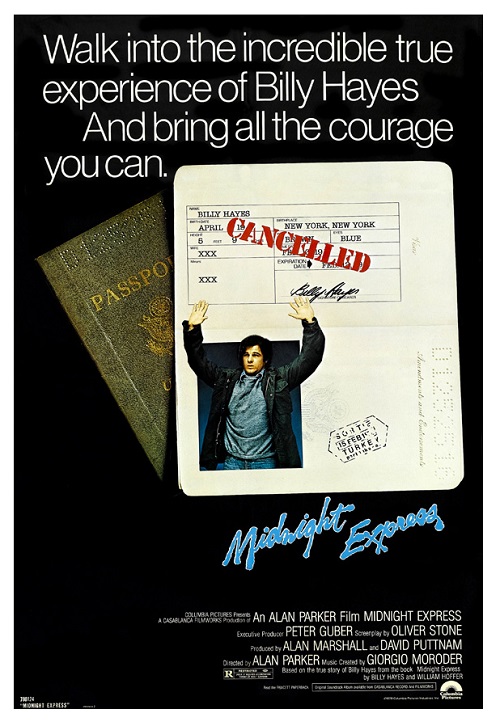
In prison slang, taking the “Midnight Express” means only one thing — making an escape. The phrase evokes a desperate, fleeting hope when every other door is closed. Alan Parker’s 1978 film transforms this idea into a powerful and raw journey, focusing as much on the struggle for survival as on the quest for freedom. From the opening frame, Midnight Express pulses with nervous energy, gripping your nerves and refusing to let go.
The film’s box office success — grossing over $35 million in the United States alone — reflects the impact it had on audiences at the time, both shocking and captivating moviegoers around the world.
The story follows Billy Hayes, an American college student who makes a catastrophic mistake. While vacationing in Istanbul in 1970, Billy attempts to smuggle two kilos of hashish out of the country by taping the drugs to his torso. Airport security catches him just moments before he boards his flight. From there, Billy plunges into the nightmarish abyss of the Turkish penal system. Originally sentenced to four years for possession, Billy endures horrific abuse and decaying conditions. Just weeks before his scheduled release, a high court makes an example of him by overturning his sentence to life in prison for smuggling. Stripped of hope, Billy realizes his only way out is to catch the midnight express.
The film’s setting serves as an unrelenting antagonist. Though primarily filmed in Malta, the movie vividly conjures the oppressive, suffocating atmosphere of a Turkish prison. Cinematographer Michael Seresin’s work is nothing short of stunning — he crafts a visual tapestry that is both brutally raw and unexpectedly beautiful.
At the center of this nightmare is Brad Davis, who delivers a raw, career-defining performance as Billy Hayes. Davis captures Billy’s tragic transformation from a naive, arrogant young man into an animalistic survivor pushed to the absolute edge of sanity. He is supported by an incredible cast, most notably John Hurt, who earned an Oscar nomination for his portrayal of Max, an eccentric, heroin-addicted fellow inmate. Randy Quaid also delivers a powerful performance as Jimmy Booth, a volatile American prisoner desperate to break out.
Amidst the violence and brutality, the film features moments of profound, unexpected tenderness. One of the most talked-about scenes involves a gentle, homoerotic exchange between Billy and a Swedish inmate in the prison showers. In an environment defined by cruelty, this moment offers a brief sanctuary of human warmth and intimacy.
This scene carries extra poignancy, knowing that Brad Davis, who played Billy, endured personal struggles off-screen and sadly died of AIDS in 1991. His vulnerability and authenticity elevate Midnight Express to a truly unforgettable experience.
Midnight Express is not an easy film to watch, but it is essential. It serves as a stark warning, a testament to the human will to survive, and a brilliant display of acting and direction. Giorgio Moroder’s pulsating, Academy Award-winning synthesizer score drives the tension forward, ensuring your heart races alongside Billy every step of the way.
This is a film that you don’t just watch; you survive. It leaves a lasting mark on your psyche, challenging you to consider what you would do if stripped of all hope. If you have not yet experienced the harrowing, unforgettable ride of Midnight Express, you owe it to yourself to take the journey.
Copyright ©️2026 by Frank Gaimari
Frank Gaimari is an author and film reviewer in Seattle, where he lives with his husband and their two golden retrievers. You can learn more about his work at http://www.FrankGaimari.com.

 FRANK'S FILM REVIEW