
⭐⭐⭐⭐
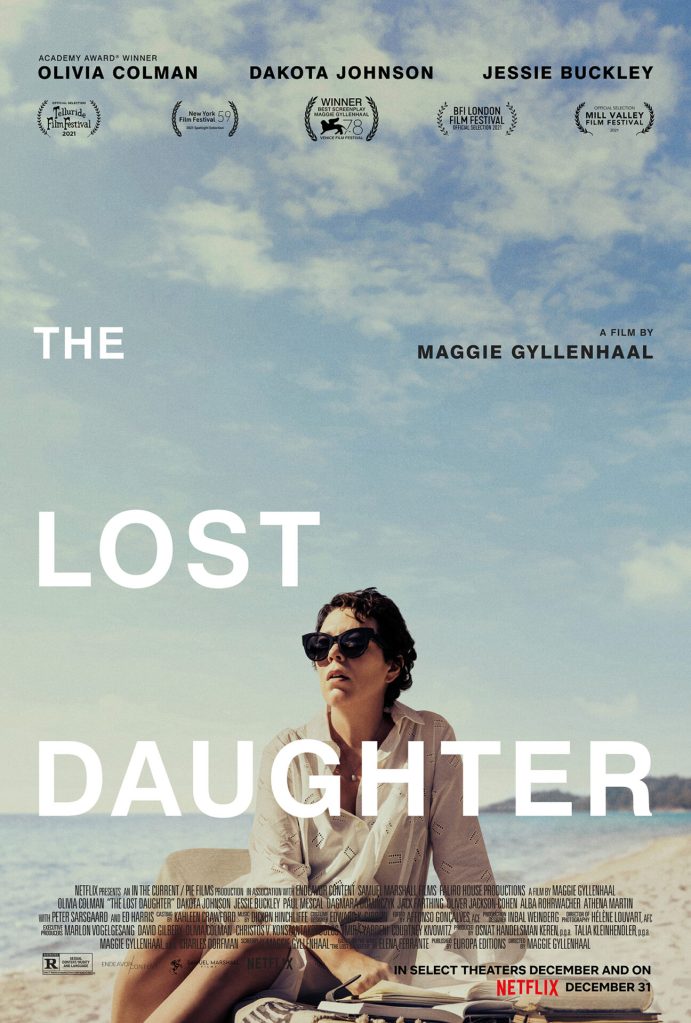
Watching The Lost Daughter, directed by Maggie Gyllenhaal, is an intimate and, at times, uncomfortable experience. The film, adapted from Elena Ferrante’s novel, doesn’t sugarcoat the rough edges of motherhood or skirt around the big, unsettling feelings that can accompany it. Instead, Gyllenhaal presents a raw, unvarnished look at family, guilt, and the complex lives of women, creating a film that lingers long after it’s over.
The story centers on Leda Caruso, portrayed by Olivia Colman. Leda heads to a Greek island for what should be a quiet and restorative solo holiday, but her peaceful escape is interrupted by a boisterous family — especially Nina (Dakota Johnson), a young mother wrestling with her spirited daughter. Watching Nina unravel something deep inside Leda, dragging her back into memories of her own struggles as a younger mother, the younger Leda is portrayed by Jessie Buckley. The film unfolds between the present and these vivid, sometimes painful, flashbacks as we come to understand the choices Leda made and the toll they took on her and her daughters.
What stood out to me is how The Lost Daughter dares to be brutally honest about motherhood. We’re not given the usual storyline of motherly sacrifice framed as sainthood. Instead, Gyllenhaal exposes the resentment, the yearning for independence, and the moments when love and exhaustion coexist. Leda isn’t just one thing — she’s loving and selfish, tender and withdrawn. That makes her so much more real and, in some ways, relatable.
Olivia Colman manages to convey so much with just her eyes — a lifetime of regret, desire, and confusion flickers across her face in silence. Jessie Buckley, meanwhile, perfectly captures the frustration and longing of young motherhood, making her journey both stressful and sympathetic to watch. Dakota Johnson brings a quiet vulnerability to Nina, whose struggles mirror Leda’s in many ways. Ed Harris also deserves mention for his understated performance as the caretaker who observes everything unfold from the sidelines.
Gyllenhaal’s approach behind the camera is both bold and subtle — there are many close-ups and countless moments where we feel as if we are right there with Leda, immersed in both the picturesque setting and her turbulent emotions. Even with the bright skies and scenic views, the tension never lets up, making the island feel almost claustrophobic.
The film received several major award nominations, including three Academy Award nods: Best Actress for Olivia Colman, Best Supporting Actress for Jessie Buckley, and Best Adapted Screenplay for Gyllenhaal herself. At the Venice Film Festival, Gyllenhaal took home the prize for Best Screenplay. At the box office, the movie earned about $8.3 million globally, but as a Netflix release, its true reach extended beyond ticket sales — its impact was measured by the conversations it sparked and the viewers it moved at home.
Personally, what I appreciate most about The Lost Daughter is its bravery in showing the tangled messiness of being a woman and a mother, refusing to tidy the story into neat resolutions. It’s a film that invites empathy and asks us to reconsider the stories we tell about women’s lives. For anyone willing to wrestle with hard questions and sit with discomfort, this movie delivers something honest, haunting, and deeply real.
Copyright ©️2026 by Frank Gaimari
Frank Gaimari is an author and film reviewer in Seattle, where he lives with his husband and their two golden retrievers. You can learn more about his work at http://www.FrankGaimari.com.

 FRANK'S FILM REVIEW