
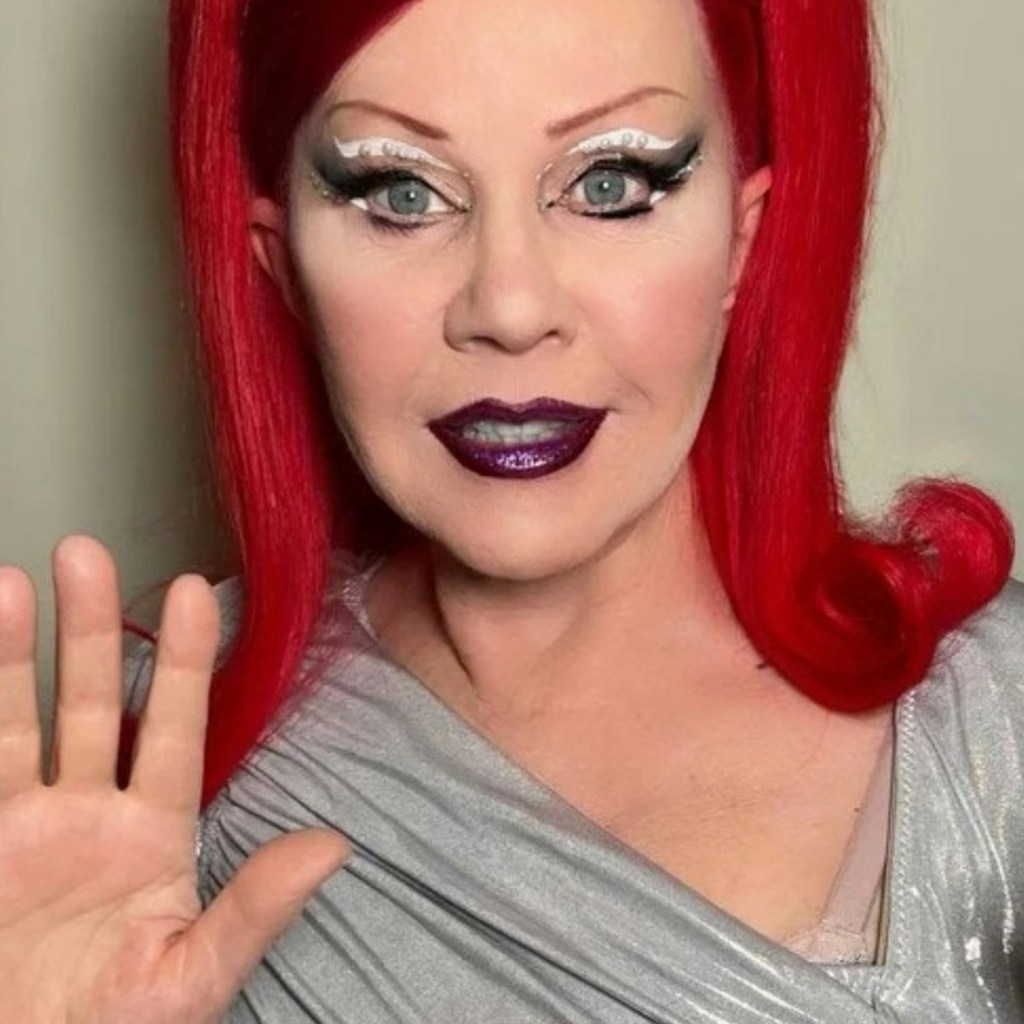
Some voices define a generation, while others create entire universes. Kate Pierson unquestionably belongs to the latter group. Her voice, shifting effortlessly from a deep, inviting growl to a soaring high note, brings a vivid, melodic energy to one of music’s most iconic party bands. As a founding member of The B-52s, Pierson — with her signature fiery hair and retro-glam fashion — has been a beacon of joyful nonconformity for more than forty years. Her energy remains as vibrant and infectious as the music she helped create.
Long before the world heard “Rock Lobster,” Catherine Elizabeth Pierson was a creative child growing up in Rutherford, New Jersey, after being born in nearby Weehawken. Her journey eventually led her to Athens, Georgia, where a spontaneous October night in 1976 changed everything. Sharing a Flaming Volcano cocktail at a Chinese restaurant, Pierson, along with Fred Schneider, Cindy Wilson, Ricky Wilson, and Keith Strickland, decided to form a band. Their very first performance — a loose and spirited jam at a friend’s Valentine’s Day party in 1977 — marked the humble beginning of what would become a global phenomenon.
From the very start, The B-52s presented a complete aesthetic package. Their look was as integral to their identity as their sound, blending thrift-store finds, exaggerated beehive hairstyles, and B-movie sci-fi glamour. This distinctive style wasn’t a calculated branding strategy but an authentic expression of who they were — a visual extension of their eccentric music. In a town buzzing with creative energy, they carved out a niche all their own.
The band’s groundbreaking sound and style quickly earned them a devoted following, and over the decades, The B-52s became one of the most beloved and influential bands in history. In 2022, their legacy was cemented with induction into the Music Hall of Fame, an honor recognizing not only their innovative contributions to music, but also their cultural impact as champions of individuality, inclusivity, and joyful rebellion. From their quirky beginnings in Athens to their status as global icons, The B-52s have left an indelible mark on the world of music and beyond.


While The B-52s cultivated a chosen family on stage, Pierson built a life of profound partnership and authenticity away from the spotlight. As a proud Queer artist, she has long been a quiet but powerful icon for visibility and living truthfully. Her relationship with artist and designer Monica Coleman, whom she married in 2015, has been a central force in her life — a collaboration built on mutual inspiration and shared dreams.
Together, Pierson and Coleman extended their creative vision into hospitality, creating the whimsically decorated Kate’s Lazy Meadow, Kate’s Lazy Cabin, and Kate’s Lazy Desert motel. These spaces are tangible expressions of Pierson’s distinctive style, offering havens of colorful, kitschy comfort. The partnership with Coleman has been a grounding influence, providing a foundation of love and support that fuels Pierson’s artistic bravery. It is a testament to a life lived fully, both in the public eye and in the quiet moments between shows.

The B-52s
As The B-52s have wound down their recent touring schedule, a new chapter is unfolding for Pierson. The band remains a family, a bond that will never fade, but her creative spirit is already exploring new horizons. One of the most exciting developments in this new phase is her latest solo album, Radios and Rainbows.
The album, a kaleidoscopic blend of genres, showcases Pierson’s unmistakable voice in a fresh and deeply personal way. Radios and Rainbows has already garnered critical acclaim for its vibrant melodies, heartfelt lyrics, and bold experimentation. Tracks like “Evil Love” and “Take Me Back to the Party” have become fan favorites thanks to their infectious energy and emotional depth. The album is a celebration of individuality, love, and resilience.
Adding to her creative renaissance, Pierson has also released a vibrant new cover of Patti Smith’s anthem “People Have the Power,” featuring the teen choir from Uniting Voices Chicago. With an uplifting dance arrangement by producer Ned Douglas, the track reimagines the iconic song while honoring its message of hope and empowerment. Pierson describes the project as a call to action for a new generation, reminding listeners that “people do have the power — and we need to use it now!”
Having seen Kate perform live at numerous concerts, I was excited for the chance to speak with her. Even though our conversation took place over Zoom rather than face-to-face, her warmth and positivity shone through. Kate’s authenticity is unmistakable. Here are the questions I asked, along with her responses.
Frank Gaimari: The B-52s’ unique visual style has always played a major role in the band’s identity. How did the look of the band influence your songwriting, and how did the music shape the visuals in return?
Kate Pierson: The B-52s’ visual style was a natural extension of who we were — playful, spontaneous, and unapologetically different. Long before the music, we were already dressing up and creating our own fun in Athens. We’d raid thrift stores like The Potter’s House, hunting for the most outrageous wigs and outfits — not to look glamorous, but to embrace the absurd. I remember Fred once fiercely claiming a ratty 25-cent wig, saying, “No, this is my wig!” That kind of energy defined us.
Our first show, on Valentine’s Day 1976, captured that spirit perfectly. Cindy and I wore upside-down fur pocketbooks that looked like white aprons. Nothing was planned or coordinated; we just wore whatever felt fun and expressive. When the band started, it was a continuation of that same creative chaos. There was no strategy, no assigned roles — it all came together spontaneously, born out of jam sessions and a shared sense of adventure.
Our look wasn’t calculated; it was simply an extension of how we lived. The thrift-store treasures and wild outfits we wore to parties became our stage costumes. Inspirations came from everywhere: Fellini films, 1960s Vogue, gay culture, drag, and a love for the eccentric. It all blended into a visual identity that reflected our music — bold, quirky, and full of joy. Dressing up wasn’t just about style; it was about freedom, creativity, and letting our freak flags fly. That spirit shaped everything we did, from how we looked to how we sounded.
FG: You consistently bring incredible energy and vibrant positivity to every performance. What inspires and sustains that enthusiasm show after show?
KP: The energy and joy we bring to every performance come from the audience as much as from within. There’s something magical about looking out and seeing people having the time of their lives — dancing, smiling, and letting go. It’s not something we set out to achieve intentionally, but knowing that our music gives people that kind of joy and freedom inspires me every time. It’s a beautiful cycle: their energy fuels mine, and it never gets old.
Our music is primarily dance music, with an irresistible rhythm. When we play, I can’t help but move — it’s like the music propels me. Sometimes I think, “Maybe I should stand still and be more dramatic for a moment,” but the beat always pulls me back in. Movement is such a natural part of what we do; it’s in the DNA of the band. We’ve always been about creating music that makes people want to dance, and you can’t stand still when you’re part of that.
We’ve tried choreographing routines a few times, but it always ends up being hilariously awkward. So instead, we just let the rhythm guide us, each doing our own thing. That spontaneity keeps it fresh and fun for both us and the audience. The driving guitar, the pounding drums — it’s all so infectious. Even after all these years, the music still moves me, and that’s what keeps the enthusiasm alive, show after show.
FG: Your views on solo albums have evolved. Can you explain why?
KP: My views on solo albums have changed a lot over the years. Early on, I saw the idea of going solo as almost a betrayal — like leaving the mothership. I think we all felt that way to some extent, and even our manager discouraged it, worried it might pull the band apart. But now, I see it differently.
Working on solo projects has actually enhanced my creativity and energy. It allows me to explore different aspects of myself, tap into new emotions, and approach music in ways that are unique to me. That, in turn, keeps me inspired and fresh when performing with The B-52s. One creative outlet feeds the other, and I’ve realized that doing solo work doesn’t take away from the band — it adds to it.
I’ve also let go of worrying about how my solo work might be judged. Now, I focus on writing songs that feel authentic, no matter the style. It’s been a freeing experience, and it’s helped me grow as an artist while staying connected to the joy of making music.
FG: Among all the songs, The B-52s albums, and solo projects, which one do you like the most and why?
KP: It’s so hard to pick a favorite because my connection to songs constantly evolves. When it comes to my solo work, my favorite is usually whatever I’ve written most recently. Right now, it’s a Christmas song I’ve been working on. There’s something exciting about the freshness of a new song — it feels alive and full of possibility.
As for B-52s songs, my favorites tend to shift depending on what I’m listening to at the moment. Lately, I’ve been revisiting some of our deep cuts while working on a lyric book, and it’s been such a joy to rediscover songs like “Detour Through Your Mind,” “Junebug,” “Communicate,” and “Cake.” These are tracks we don’t often perform live, but hearing them again has brought back so many memories. One week, I’ll be obsessed with one song, and the next week, it’ll be something else.
If I had to name a current favorite, I’d say “Trism.” But honestly, my favorites are constantly changing — it’s like each song has its moment to shine, depending on where I am and what I’m feeling.
FG: How has your marriage to Monica, a talented artist herself, influenced your personal creative process outside of the band?
KP: My marriage to Monica has been a profound and transformative influence on my creative process. From the moment I met her, I was captivated by her energy, talent, and creativity. She’s an incredible artist in her own right, working in pottery, sculpture, jewelry, and so much more. Right now, she’s creating stunning sculptural clay pieces that are truly inspiring. Her artistry and passion constantly push me to explore new ideas and deepen my own creativity.
Monica was the driving force behind my first solo album. She recognized how much I wanted to pursue it, even before I fully embraced the idea myself. She even connected me with Sia, who helped me realize that I could write songs with anyone. Those early writing sessions were transformative, and Monica was there every step of the way. She directed the music video, designed the album cover, and even served as tour manager for my solo shows, handling everything from logistics to the business side. Her ability to juggle so many roles with such grace and talent is nothing short of remarkable.
What makes our relationship so special is the mutual respect and support we share for each other’s creativity. I trust her opinion completely — she’s always the first person I turn to for advice or feedback. Monica’s encouragement and creative spirit have been a gift, not just to my work, but to my life.
FG: What does the concept of “home” mean to you now, after a life spent roaming the globe?
KP: The concept of “home” has taken on a much deeper meaning for me after spending so much of my life traveling the world. Home is my sanctuary — a place where I can truly relax, recharge, and feel grounded. I love the comforts of home, whether it’s curling up in my own space or simply enjoying the quiet familiarity of it all. It’s where I can catch my breath, reflect, and reconnect with myself.
Of course, after some time at home, the travel bug always kicks in, and I’m ready to hit the road again. I still love the thrill of traveling, especially when it’s tied to performing. There’s something so exhilarating about connecting with people in different places and sharing music with them. For me, “home” is both a place of comfort and the foundation that gives me the energy to explore the world. It’s that balance between staying grounded and chasing adventure that makes life so fulfilling.
FG: How has your understanding of your role as a queer icon evolved from the early days of the band to now?
KP: In the early days of The B-52s, we didn’t feel the need to declare our identities — we just were. The very essence of the band, our vibe, our sensibility, was inherently queer. It was in the music, the energy, and the way we presented ourselves. Back then, there was still a sense of fear around being openly gay, but we expressed ourselves authentically without necessarily labeling it. Our existence and creativity were a statement in themselves.
Over time, my understanding of what it means to be a queer icon has evolved into something more conscious. Today, it’s not just about visibility — it’s about actively fighting for rights and standing up against the injustices that threaten our community. While we’ve made incredible progress, like the legalization of gay marriage — which was such a powerful moment of affirmation and acceptance — there’s still so much at risk. The targeting of the trans community is heartbreaking. Trans people are among the most vulnerable within the LGBTQ+ spectrum, and they’re just beginning to gain the voice, power, and recognition they deserve. It’s devastating to see them being attacked and marginalized.
The political climate has also reignited fears, with threats to LGBTQ+ rights, women’s rights, and even democracy itself. It feels like we’re in another fight for our lives, and it’s more important than ever to rise, stand together, and push back against these injustices. My role as a queer icon now feels deeply tied to this fight — not just for visibility, but for equality, safety, and the right to exist freely. It’s about using my voice and platform to support the community and ensure we don’t lose the progress we’ve fought so hard to achieve.
FG: You’ve been a powerful voice for visibility. What advice would you give to young Queer artists today who are trying to find their authentic voice in the industry?
KP: My biggest advice is to be your authentic self. Don’t try to be something you’re not just to get attention. Sure, some people might take an extreme approach to stand out — like when Lady Gaga first started, she made bold moves to grab people’s attention — but even then, it was rooted in who she truly was as an artist. The key is to stay true to your voice and your identity.
So, don’t aim to imitate others — focus on what makes you different. Be unapologetically yourself, and let your unique perspective and talents set you apart. When you lead with authenticity, people can sense it, and that’s what leaves a lasting impression.

Radios & Rainbows / Kate Pierson
The magic of The B-52s has always gone beyond the music itself. It’s about the sense of freedom their songs inspire — about friendship, love, and the boldness to create something new when the world feels upside down. At the center of it all is Pierson’s unmistakable voice, still inviting listeners to “dance this mess around” and reminding us that the best parties are those where everyone belongs.
Kate’s official website: https://www.katepierson.com/
Copyright ©️2025 by Frank Gaimari
Frank Gaimari is an author, film reviewer, and actor based in Seattle. He lives with his husband and their two golden retrievers. Learn more about his work at http://FrankGaimari.com.
Publications


 FRANK'S FILM REVIEW