
by Frank Gaimari

Greg Herren is a name synonymous with LGBTQ+ literature, particularly in the mystery genre. A prolific author and advocate, Herren has spent decades crafting stories that not only entertain but also celebrate queer life and culture. He has written over 30 novels, drawing deeply from his love for New Orleans — a city that has significantly influenced both his life and his writing.
Born in Alabama on August 20, 1961, Herren grew up in a time when being openly gay was far from accepted. Despite the challenges, he found his voice as a writer and has become a cornerstone of Queer storytelling. Now 64, Herren lives in New Orleans with his partner, where he continues to write and advocate for queer representation in literature.
New Orleans is more than just a setting in Herren’s books — it’s a character. His stories vividly weave together the city’s vibrant culture, rich history, and unique blend of beauty and decay. From the French Quarter to the Garden District, Herren captures the essence of New Orleans in a way that feels both authentic and deeply personal.
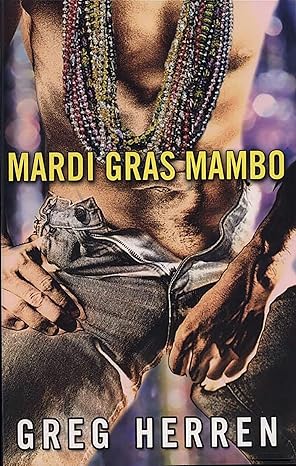
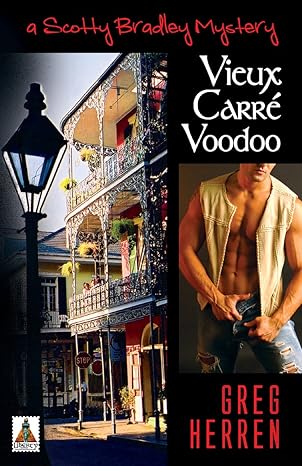
Herren’s bibliography is as diverse as it is extensive. He has written mysteries, young adult novels, and even erotica under the pseudonym Todd Gregory. His most famous works include the “Chance MacLeod” and “Scotty Bradley” series, both set in New Orleans and starring LGBTQ+ protagonists. His work has earned him numerous accolades, including Lambda Literary Awards. His books are known for their sharp wit, intricate plots, and authentic representation of queer life. Herren’s experience as an HIV/AIDS counselor and educator deeply enriches his writing, infusing his characters and stories with profound depth and humanity.
In addition to his writing, Herren is a co-founder of the Saints and Sinners Literary Festival, an annual event in New Orleans that celebrates LGBTQ+ literature. The festival has become a hub for Queer writers and readers, offering a space to connect, share stories, and celebrate the power of words.
This fall, Herren returns with Hurricane Season Hustle, the highly anticipated installment in the beloved “Scotty Bradley” series. Set in a storm-ravaged Garden District estate, the story traps Scotty and his family in a gripping, high-stakes mystery as a hurricane roars outside. With a killer lurking among them, Scotty must uncover the truth before it’s too late. Rich with atmospheric detail and pulse-pounding suspense, Hurricane Season Hustle delivers all the intrigue, drama, and masterful storytelling fans have come to expect.
As an enthusiastic reader of Greg’s books, I was pleased when he agreed to an interview. Here are my questions along with his responses.
Frank Gaimari: New Orleans plays such a significant role in your books. How has the city shaped your storytelling?
Greg Herren: I like to say that New Orleans made me an author. I had always been a writer, but it wasn’t until I moved here in 1996 that I truly became one. I love this city with all my heart because it has given me everything I ever wanted in life. When I write about places other than New Orleans, it feels slightly off, if that makes sense. Inspiration is endless here — I often find myself diving into research wormholes about the city and its rich history. One of the most rewarding things about writing about New Orleans is that anything — truly anything — can and does happen here. The people are wonderfully eccentric. I don’t feel out of place here. This is my home.
FG: Your characters are rooted in the LGBTQ+ community. How do you approach creating authentic and diverse characters?
GH: Well, they’re people! I write about Queer people because I am a Queer man, and it’s kind of a safe space for me. Whenever I teach workshops on writing diverse characters, I always emphasize that everyone is a person, with flaws, quirks, blind spots, kindnesses, scars, heartbreaks, and complicated family ties. You have got to make sure you show they’re humans, like everyone else. If you start from “I want to write a diverse character” rather than “I want to write a character and this is a part of who they are,” you’re going to fail.
FG: How has your work as an HIV/AIDS counselor influenced your writing?
GH: Being a trained counselor comes with both advantages and challenges. As someone naturally empathetic, I’ve always found it easy to view situations from different perspectives — a quality that greatly supports my counseling work. This mindset also enhances my writing, reminding me to approach even my flawed characters without judgment and to consider the motivations behind their actions.
FG: You’ve written across multiple genres, from mystery to young adult fiction to erotica. How do you decide which genre to explore next?
GH: I don’t typically think in terms of genres — “I’ll tackle this genre next” — because, for me, the story itself is what matters most. Genres aren’t something I dwell on. But almost everything I write has to do with death — horror and crime are opposite sides of the same coin. I’ve not written erotica in years, mainly because the market has pretty much dried up. My erotica was often criticized for being too real, athletic, and sweaty… you know, like sex.
FG: What challenges have you faced as an openly gay author in the publishing industry?
GH: I believe publishing has become a more welcoming space for queer authors today, but that wasn’t the case when I first started. Back then, mainstream bookstores and conferences often treated me like I was something to avoid. I’ll never forget when a mystery store manager told me over the phone, “We don’t carry those kinds of books here.” Despite this, we had a thriving Queer publishing subculture that offered support and community. Queer bookstores, magazines, newspapers, and community centers provided a lifeline for Queer authors, creating spaces where our work could thrive.
But those resources have largely disappeared. The vibrant network that once supported me is no longer there. For someone starting today, that path no longer exists.
FG: The Saints and Sinners Literary Festival has become a significant event for LGBTQ+ literature. What inspired you to co-found it?
GH: My partner works for the Tennessee Williams Literary Festival, and years ago, we both had the privilege of working with Lambda Literary. During our time there, we organized a writer’s conference, which unfortunately ended after we moved on. One evening, while chatting with J.M. Redmann, we began reminiscing about how much fun it would be to host a conference in New Orleans. What started as an idea quickly turned into reality, and now, over two decades later, the conference is still going strong.
FG: Your books often explore serious themes, such as resilience and identity. How do you balance these with humor and suspense?
GH: I’ve always believed that laughter is healing, and if you can find the humor in something awful, it helps. I’d rather laugh than cry. And I think I’m unintentionally funny? People find humor in things I write that I think are incredibly dark, which always catches me off guard. I also love writing about resilient Queer people because we are just that. We’re survivors, and sometimes you need to laugh to survive. I wish I had a better answer for you!
FG: What advice would you give to aspiring LGBTQ+ writers looking to break into the mystery genre?
GH: What was that Dorothy Parker quote about aspiring writers? “Kill them now while they’re still happy.” If you dream of becoming a mystery writer, the best advice is to immerse yourself in the genre — read extensively, exploring works from a variety of authors. There’s also a fantastic support group called Queer Crime Writers, which I’m proud to be a part of. Most importantly, write. Write as often as you can, whenever you can. Remember, no matter how imperfect your first draft may be, everything can be revised and improved. But first, you need words on the page.
FG: Can you share details about your new book, Hurricane Season Hustle?
GH: The tenth Scotty Bradley mystery offers a fresh twist on the series. Set entirely during a hurricane, the story unfolds as Scotty and his partners take shelter in his grandparents’ Garden District mansion. However, their refuge soon turns sinister when bodies begin to appear. Combining the tension of a time-constrained mystery with the intrigue of a locked-room whodunit, this novel brings two classic mystery elements together in an exciting and suspenseful way, something I’ve always wanted to explore!

Greg Herren’s work is a vibrant celebration of Queer life, the magic of New Orleans, and the art of storytelling. Whether you’re a devoted reader or just diving into his world, his stories promise an unforgettable journey. Trust me, I say this as one of his biggest fans.
Copyright ©️2025 by Frank Gaimari
Frank Gaimari is an author, film reviewer, and actor based in Seattle, Washington. He lives with his husband and their two golden retrievers. Learn more about his work at http://FrankGaimari.com.
Publications


 FRANK'S FILM REVIEW
One thought on “Greg Herren: The Master of Queer Mysteries and New Orleans Storytelling”