
by Frank Gaimari
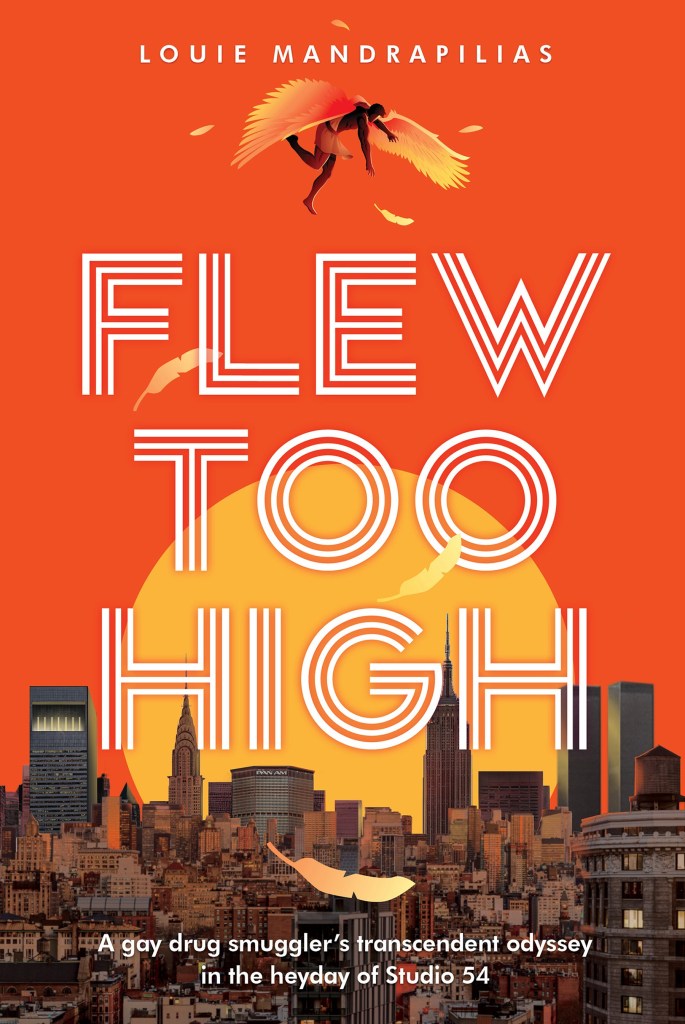
Louie Mandrapilias, born on December 20, 1956, in Shreveport, Louisiana, has established himself as a talented author and screenwriter. Now 68 and residing in Los Angeles, Louie captivates audiences with his compelling storytelling.
Louie’s memoir, Flew Too High, is a testament to his remarkable life and narrative talent. Set against the vibrant and chaotic backdrop of 1970s New York, the book delves into the magnetic allure of Studio 54. It chronicles his journey through a captivating yet dangerous relationship that drew him into the dark underworld of drug smuggling. What begins as a story of reckless abandon in Manhattan transforms into a spiritual awakening in India. Lauded for its honesty and depth, Flew Too High has earned accolades from readers everywhere.
Reading Flew Too High was a profoundly moving experience, thanks to its raw and unflinching honesty. Louie spares no detail, delivering a story that is as captivating as it is surprising. Without giving away any spoilers, I can assure you that the twists and revelations will leave you astonished—even speechless. Once you reach the halfway mark, putting this book down will be nearly impossible.
Louie took the time to speak with me. Here are his thoughtful responses to my questions.
Frank Gaimari: Your memoir portrays the queer culture of the 1970s, highlighting Studio 54, sex, and the drug scene. What inspired you to write about this chapter of your life decades later?
Louie Mandrapilias: Initially, I set out to share the untamed adventures of my youth as a gay man during the gay liberation movement before the arrival of the AIDS crisis. But as I reflected, I was drawn to the deeper struggles—my journey to embrace my identity and my father’s struggle to accept me. It’s a deeply relevant story for many LGBTQ+ youth today, especially in our current political climate.
FG: Studio 54 was a sanctuary for many in the LGBTQ+ community. What drew you to this environment?
LM: Being a Southern gay college kid who read Warhol’s Interview magazine, it was my entree into debauched society. Once I passed the velvet rope, I had arrived. To be accepted into that world, inhale amyl nitrate on the dance floor, and make out in the balcony as Donna Summer sang Love to Love You, Baby was my moment of becoming.
FG: You link your Southern upbringing and Greek heritage to the inner tensions you faced about tradition, rebellion, and queerness. How has this influenced your storytelling?
LM: My not-so-typical mix of cultures gave me a unique perspective on life. No matter how I tried, I would never fit into anyone’s idea of a Southern gentleman or a good Greek boy. I would always be an outsider, a non-conformist who would have to chart his own path. Initially hiding, I had to find my way in the dark. As an adult, I realize my unique worldview is my source for surprising takes on life.
FG: While experiencing the excitement of smuggling and partying, you also go on a spiritual journey in India. How did this change you as a gay man?
LM: Growing up in a religious household, I encountered concepts like “eternal damnation” and “original sin,” which turned me away from God. Even at age 10, something deep within me sensed these teachings didn’t feel right. It wasn’t until a decade later that I encountered Eastern spiritual philosophies centered on love and acceptance. This new understanding transformed my perspective. Discovering that I could cultivate a personal connection with a higher power by acknowledging its presence brought me inner peace. While this journey of self-discovery and spiritual growth has taken a lifetime, it has shaped how I seek and nurture that peace within myself.
FG: The memoir dives into the “battles of the soul” between different aspects of yourself—from desire and addiction to a longing for love and purpose. Did you find peace and self-acceptance through this book?
LM: One of the greatest gifts of this work was making peace with my father. For so long, I blamed him for my loneliness and wondered if I would ever feel complete acceptance. As I relived my childhood, I could put myself in my father’s shoes, struggling to find his way and how difficult it must have been for an immigrant in a new country. It’s not very different from what we continue to see in the U.S.
FG: Your book is a time capsule of a fleeting, permissive era before the AIDS crisis changed everything. What lessons or inspiration do you hope young queer readers today will take from your unforgettable odyssey in Flew Too High?
LM: Even though we’re not politically out of the woods, the LGBTQ+ community has a strong, collective voice that we did not have in the ’70s. I hope they understand the significant strides we’ve made, the advances in health and medicine that so many gay brothers and sisters gave their lives for, so that today’s queer community has a greater chance for well-being. Of course, the battle isn’t over!
FG: You’ve hinted at a sequel to Flew Too High. Can you share details about what readers can expect in the next chapter of your story?
LM: The next book delves deeper into the struggles of addiction and the oppressive grip of government control. Old criminal habits don’t disappear overnight, and the impending crisis of “gay cancer”—a term tragically coined during the early AIDS epidemic—was about to change everything. As we made progress in opening the closet door and gaining societal acceptance, suddenly, it slammed shut again. Imagine being a young, sexually active person told to stop living authentically or face dire consequences. We lost countless lives, but many of us survived. I feel profoundly grateful to share this ongoing journey and the lessons it teaches us.
Louis Mandrapilias’ book can be found online and in bookstores everywhere.
Frank Gaimari is the author of Circus Animals: A Novel, a film reviewer, and an actor. He lives in Seattle, Washington, with his husband and two golden retrievers.
Copyright ©️2025 by Frank Gaimari
Publications

 FRANK'S FILM REVIEW