
⭐⭐⭐⭐⭐
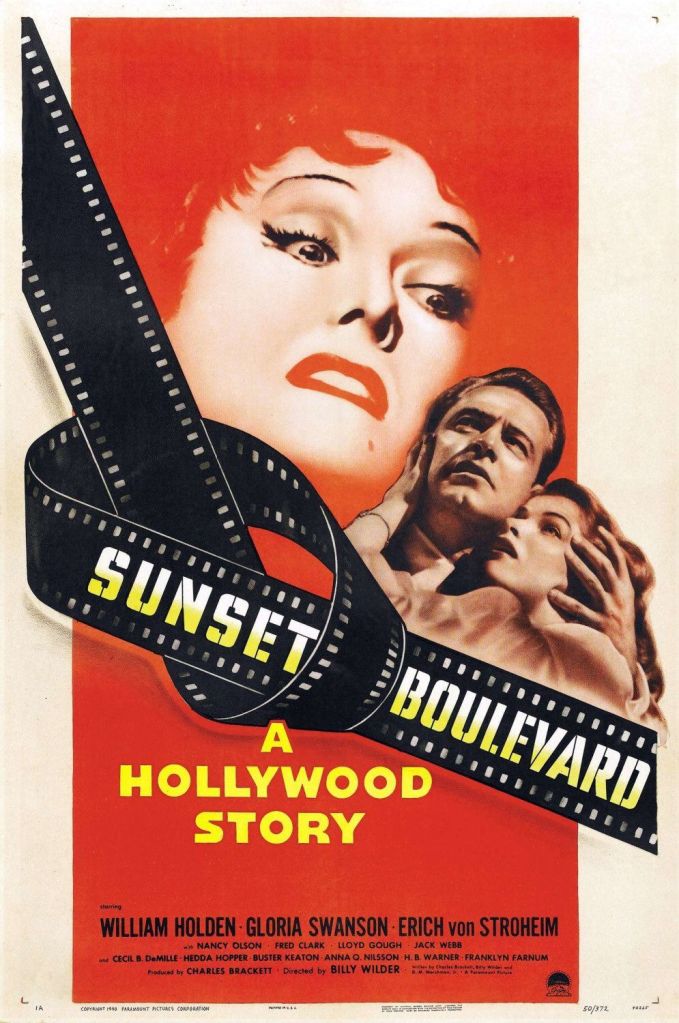
The film Sunset Boulevard tells the story of Joe Gillis (William Holden), a struggling screenwriter trying to make ends meet in a ruthless Hollywood. Fate leads him to Norma Desmond, a reclusive former silent film star (Gloria Swanson), who resides in her crumbling mansion, lost in the memories of her golden years. Norma clings desperately to her past glory and dreams of returning to the spotlight, convinced she’s still the darling of the silver screen. When Joe reluctantly becomes her house guest and script collaborator, their dynamic turns dark and spiraling. Norma’s lonely generosity and growing obsession trap Joe, and the film evolves into a haunting exploration of desperation, fame, and heartbreak.
At the heart of it all is Gloria Swanson. Swanson owns every frame she’s in. From the moment we meet Norma, draped in opulent robes and surrounded by the dusty relics of her stardom, she radiates a dazzling yet chilling presence. Swanson’s masterful performance balances grandiosity with gut-wrenching vulnerability. Her delivery of the iconic line, “I am big. It’s the pictures that got small,” is not only defiant but deeply heartbreaking. She brings layers of frailty and strength to Norma, making her as tragic as she is unforgettable.
Yet Swanson’s brilliance doesn’t stand alone. William Holden delivers an exceptional performance as Joe Gillis, the jaded yet opportunistic writer swept into Norma’s tangled world. Holden injects Joe with equal measures of charm and weary cynicism, creating a flawed and relatable protagonist. His ability to anchor Joe’s growing discomfort and quiet compassion for Norma adds much-needed emotional weight to the film. Meanwhile, Erich von Stroheim is magnetic as Max, Norma’s loyal but mysterious butler. Von Stroheim brilliantly underplays Max’s devotion, slowly revealing hidden depths that make his character as much of a tragic ghost as Norma herself. And we mustn’t forget Nancy Olson, who adds a warm, grounded touch as Betty Schaefer, a young and hopeful writer who briefly becomes the other side of Joe’s fractured world.
Then there’s the look of the film. In timeless black-and-white cinematography by John F. Seitz, Sunset Boulevard is visually stunning. Norma’s mansion appears majestic and ghostly, perfectly reflecting her crumbling psyche. Billy Wilder’s direction ties it together, portraying Hollywood in glistening light and unforgiving shadows.
On its release in 1950, Sunset Boulevard became a critical and commercial triumph, earning over $5 million at the box office—a remarkable accomplishment for such a bold, introspective story. Its sharp critique of Hollywood’s vanity and relatable characters have stood the test of time, resonating with audiences today. With eleven Academy Award nominations and three wins, it secured its place as one of the greatest achievements in film history. For those new to classic Hollywood, Sunset Boulevard is more than a movie—it’s an unforgettable introduction to the glamour, heartbreak, and timeless artistry that defined an era.
Copyright ©️2025 by Frank Gaimari

 FRANK'S FILM REVIEW